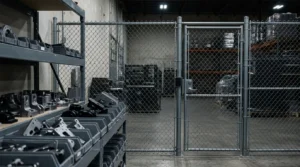
Every January there is a warehouse somewhere with a wall of holiday product that did not sell.
The instinct is to keep it, because it feels like throwing away money to clear inventory that will
be back in season in eleven months. That instinct is usually wrong, and the reason is arithmetic
rather than sentiment.
This guide covers the carry-over math, which seasonal categories genuinely cannot survive a
year in storage, and how to plan clearing into the season calendar instead of improvising in
February.
The Carry-Over Math
Holding seasonal stock for a year means eleven months of storage on space that could hold
product turning several times over. Add handling in and out, shrink, and the labour of counting it
in two cycle counts. Then account for what actually happens when the season comes around.
Packaging gets refreshed. The planogram changes. The assortment shifts and last year color
story is off. A retailer that took it last year has a different buyer this year. Product that was
marginal at full price in December is not more attractive twelve months later in packaging that
now looks a year old, and it is competing against your own new stock for the same shelf.
The realistic recovery on carried-over seasonal goods is a deep discount in a channel you do
not control. Against eleven months of carrying cost, clearing it now frequently nets out better,
and it does so immediately rather than as a hope.
What Genuinely Cannot Be Carried Over
• Year-dated packaging, ornaments, and commemorative items printed with the year
• Licensed character and property merchandise where the license has lapsed or is about
to
• Seasonal food, confectionery, and gift baskets with dated shelf life
• Gift-with-purchase items and promotional inserts tied to a specific campaign
• Co-branded holiday sets built with a partner whose agreement has ended
• Anything printed with an offer code, a promotional deadline, or a campaign URL
• Product with printed pricing that will not match next year
The licensing point deserves emphasis. Holiday assortments lean heavily on licensed
characters and properties, and those agreements have end dates. Warehousing licensed
product past the term is exactly the situation where a licensor asks for proof of destruction, and
finding out about that obligation in November is worse than acting on it in January.
Why Liquidating Seasonal Goods Backfires
Selling leftover seasonal stock to a liquidator converts a cost into a small recovery, and then
that product reappears next season through discount channels and marketplaces at a fraction
of your price, competing directly with your new full-price assortment under your own brand.
For dated or licensed product it is worse than a pricing problem. Merchandise bearing a lapsed
license circulating a year after the agreement ended is a licensing exposure, and the fact that a
third party sold it does not remove your name from the box.
Holiday Food, Confectionery, and Gift Baskets
Seasonal food is the clearest case for destruction because the decision is made for you by the
date code. Chocolate and confectionery that sat in a non-climate-controlled warehouse through
a summer are not sellable regardless of what the label says, and gift baskets combine food,
packaging, cellophane, basket material, and often a non-food item in one unit.
These need depackaging so the food fraction is routed appropriately, the packaging is
separated, and no intact branded retail unit survives the process. Sending sealed gift sets to a
landfill leaves complete, saleable-looking product where somebody can recover it.
Decorations, Lighting, and Battery-Powered Items
Light strings, animated displays, and battery-powered decorations carry electrical safety
considerations and contain batteries or wiring that cannot go through a general stream. Flag
these separately at pickup. Items pulled from sale for a safety reason should never be donated
or liquidated, because the hazard follows the product regardless of how it moved.
Plan Clearing Into the Season Calendar
• Set the carry-or-clear cutoff before the season starts, with a defined date and a defined
threshold
• Decide by category rather than by pallet, since dated and licensed goods have no carry
option
• Book destruction capacity in advance, because January and February are the busiest
window for this work
• Record counts by SKU before the product leaves the building
• Align the destruction date with your year-end or Q1 inventory adjustment so the write-off
and the certificate match
• Keep the Certificate of Destruction with the inventory adjustment rather than in a
separate operations file
The timing point matters more than it sounds. Every seasonal business in the country reaches
the same conclusion in the same six weeks, and capacity is easier to secure in December for
January than it is in January for January.
Clear the Season and Start Clean
At inventorydestruction.com, seasonal and holiday inventory projects cover general
merchandise, decorations, dated packaging, and seasonal food with appropriate depackaging,
counts recorded by SKU, and a Certificate of Destruction issued on every project.
Contact our team today to schedule certified seasonal inventory destruction with complete
documentation across all 50 states.