Winning a counterfeit case or recovering fake product from a distributor feels like the end of the problem. In practice it is the start of a logistics problem. Somebody now has to take custody of several pallets of fake goods, store them securely, and destroy them in a way that satisfies a court, a settlement agreement, or simply the brand owner’s own standard.
Counterfeit inventory is the one category where the goods themselves are the evidence and the risk at the same time. This guide covers how counterfeit destruction projects arise, what usually goes wrong, and what the record needs to show.
Where Counterfeit Inventory Comes From
- Court-ordered destruction following trademark infringement litigation
- Settlement agreements in which the infringer surrenders remaining stock
- Goods recovered from distributors, resellers, or marketplace sellers after a takedown
- Product held by a customs broker or importer after a seizure or exclusion decision
- Unauthorized overruns discovered at a contract manufacturer
- Counterfeit units identified in the returns stream or during a channel audit
Court Orders and Settlements Set the Terms
When destruction follows litigation, the order or the agreement usually specifies what has to happen. That can include destruction within a set number of days, destruction at the infringer’s expense, a requirement for witnessed destruction, photographic or video evidence, or a sworn certification filed with the court.
Read the document before scheduling. The most common failure in these projects is not the destruction itself. It is destroying the goods in a way that does not match what the order required, then trying to prove compliance after the fact.
Preserve What You Need Before You Destroy
Counterfeit goods are evidence. Before destruction, confirm with counsel whether samples must be retained for ongoing litigation, related cases, or law enforcement referrals. Once the inventory is destroyed it cannot be recovered, and a sample that was not set aside is gone permanently.
A practical approach is to pull and document representative samples by SKU, photograph the full lot, and record quantities before anything is loaded for destruction.
Why Counterfeits Cannot Be Donated or Recycled Intact
There is a recurring suggestion that seized counterfeit apparel or footwear should be donated rather than destroyed. The problem is that the goods still carry an infringing mark, and putting them into circulation in any form continues the infringement. Counterfeit products may also be unsafe, with unknown materials, failed electrical components, or contaminated ingredients in the case of cosmetics and consumables.
Some materials can be recovered after the marks and the product form have been destroyed, such as textile fiber or metal. The order matters: destroy the product and the branding first, then recover what can be recovered.
Chain of Custody From Seizure to Destruction
Counterfeit inventory has a way of disappearing between the warehouse and the shredder. Goods that look genuine have resale value, and that value creates temptation at every handoff.
- Count and photograph the goods at pickup, by SKU where possible
- Use sealed trailers or containers with recorded seal numbers
- Reconcile counts at the destruction facility before processing begins
- Keep the inventory under access control from receipt to destruction
- Offer the brand owner or counsel the option to witness the destruction
Destruction Methods by Category
Apparel, Footwear, and Accessories
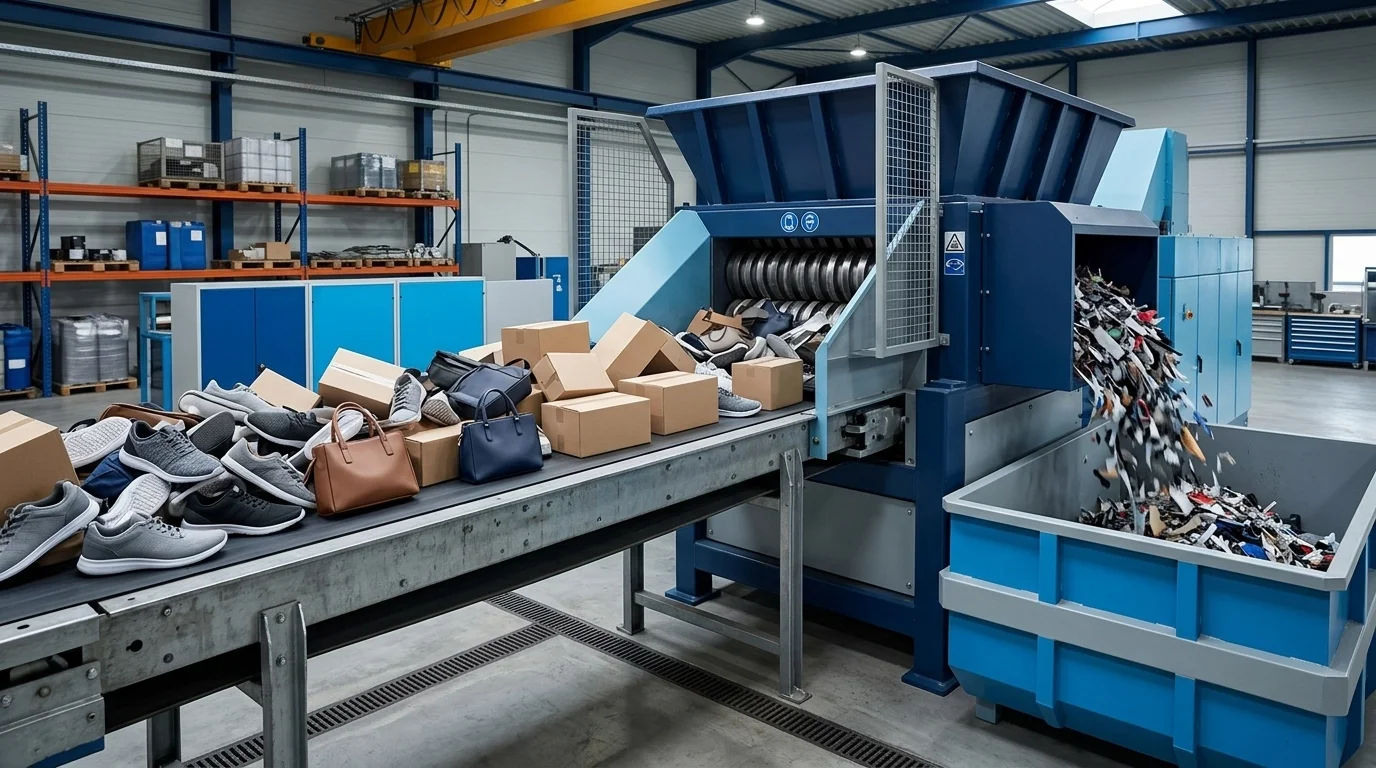
Shredded so that no wearable item or recognizable logo remains. Cutting off labels is not enough, because the design itself is often the infringing element.
Electronics and Accessories
Counterfeit chargers, batteries, and devices need battery removal and separate handling before shredding. They are frequently the most dangerous items in a seizure.
Cosmetics, Fragrances, and Consumables
Depackaged so that contents are routed separately from containers, which are then crushed or shredded. Fragrances are often flammable and need to be handled accordingly.
Packaging, Labels, and Hang Tags
Loose counterfeit packaging and labels are destroyed alongside the goods. They are often the most valuable thing to a counterfeiter, since they turn generic product into fake branded product.
Documentation the Brand Owner Will Need
The record should identify goods by description and quantity, reference the case number or agreement where applicable, state the method, date, location, and facility, and include photographic evidence when the order requires it. Keep it with the litigation or enforcement file so it is available if the infringer reappears.
Destroy Counterfeits With a Record That Holds Up
At inventorydestruction.com, counterfeit goods projects are handled with counted intake, secure chain of custody, witnessed destruction on request, and a Certificate of Destruction issued on every job.
Confirm the requirements of your order or settlement with counsel before scheduling. Contact our team today to arrange certified counterfeit destruction with complete documentation across all 50 states.