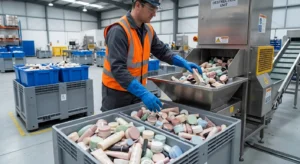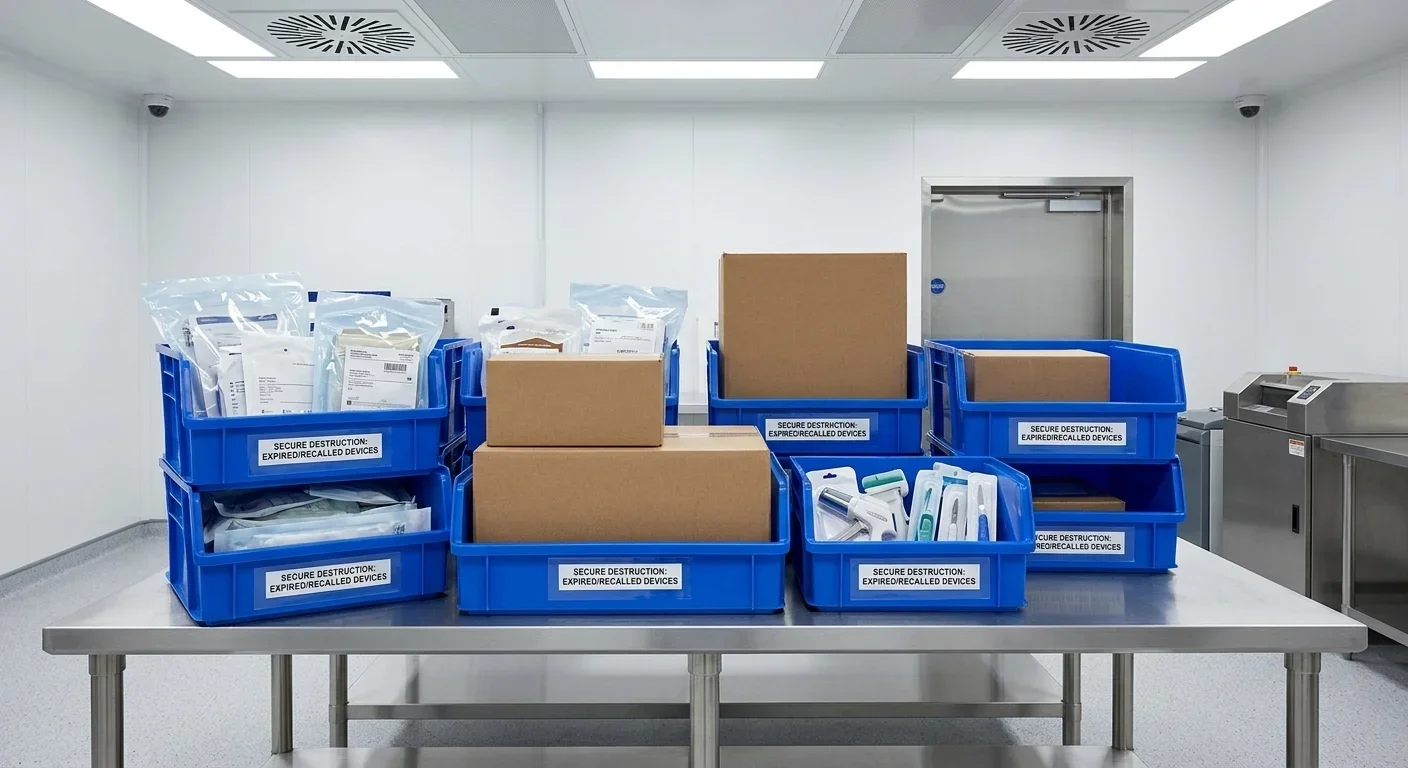
Medical devices occupy an awkward middle ground in destruction. They are regulated products like pharmaceuticals, they often contain electronics and batteries like consumer goods, and some of them store patient data. A pallet of expired surgical kits and a pallet of returned infusion pumps are both medical device destruction projects, and they have very little else in common.
This guide covers the reasons device inventory is destroyed, what makes these projects different from general merchandise, and what documentation manufacturers and distributors should keep.
Why Device Inventory Ends Up Destroyed
- Sterile devices past their labeled expiration date, where sterility can no longer be assured
- Recalls and field corrections initiated by the manufacturer or requested by FDA
- Returned devices from hospitals and distributors that cannot be reprocessed or resold
- Products affected by a labeling change, a packaging failure, or a sterilization deviation
- Discontinued models and superseded components held in service inventory
- Demonstration and evaluation units that have reached end of life
- Devices damaged in transit or through storage conditions outside specification
Expired Sterile Devices Cannot Be Rescued
Once a sterile device passes its expiration date, there is no general path back. The expiration reflects validated packaging integrity and sterility, not just product performance. Re-sterilization is only possible under processes the manufacturer has validated, which rarely exist for single-use devices.
Expired sterile product should be destroyed rather than donated or sold. There is a persistent secondary market for expired surgical supplies, and once they leave your control there is no way to keep them out of a clinical setting.
Recalled Devices Need Lot and Serial Records
Device recalls are closed by showing that affected units were recovered and corrected or destroyed. For many devices that means records by lot or serial number, not just a count. Devices carrying a Unique Device Identifier make this reconciliation easier, because the identifier on the label can be recorded at receipt and matched against the recall list.
A destruction certificate that does not list lots or serials cannot support a recall termination. Build the receiving process around the identifiers the recall uses.
Electronics, Batteries, and Data
Batteries
Powered devices often contain lithium batteries that must be removed before shredding. A lithium cell punctured in a shredder can start a fire that spreads quickly through mixed material. Flag battery-powered devices before pickup so they can be handled separately.
Stored Patient Data
Infusion pumps, monitors, imaging equipment, and diagnostic devices may store patient information. Where a device holds data, the storage component needs to be destroyed or sanitized, and the record should say so. Healthcare customers returning devices will ask about this, and the answer needs to be documented.
Circuit Boards and Firmware
Boards and firmware carry proprietary design information. Physical destruction of the boards protects your intellectual property as well as any data they hold.
Contaminated Returns Are a Separate Stream
Devices returned from clinical use may be contaminated with blood or other potentially infectious material. These cannot be processed as general merchandise. They need to be decontaminated by a validated process or handled as regulated medical waste under the applicable state rules before any further destruction. Confirm the status of returned devices before they are mixed with unused stock.
Destruction Methods
- Unused, non-powered devices: shredding to render them unusable and unrecognizable
- Powered devices: battery removal followed by shredding, with metals and boards routed to recovery where possible
- Data-bearing components: physical destruction of storage media with serial-level records
- Packaging and labeling: shredded so that UDI labels, lot codes, and brand marks cannot be reused
- Clinically used devices: handled as regulated medical waste or decontaminated before processing
Documentation to Retain
The record should identify devices by model, lot or serial number, and quantity, state the method and facility, record the date, and note any data-bearing components and how they were handled. Keep it with your recall file, complaint file, or inventory adjustment as applicable.
Handle Device Inventory Correctly
At inventorydestruction.com, medical device projects are handled with identifier-level receiving, separate handling of batteries and data-bearing components, and a Certificate of Destruction itemized by product on every job.
Contact our team today to schedule certified medical device destruction with complete documentation across all 50 states.