Vape inventory becomes unsellable for regulatory reasons more often than for commercial ones. A product can lose its legal path to market through a federal marketing decision, a state flavor ban, a local restriction, or a retailer decision, and distributors can be left holding large volumes of product with no legal buyer.
Destroying it is harder than most categories. A single disposable vape combines nicotine liquid, plastic, metal, a heating element, and a lithium battery, and each of those creates a different problem. This guide covers why vape inventory ends up destroyed and how to handle it correctly.
Why Vape Inventory Becomes Unsellable
- Products without FDA marketing authorization that cannot be lawfully sold
- State and local flavor bans that prohibit flavored products in specific markets
- State registry and directory laws that restrict sale to listed products only
- Retailer delisting following enforcement activity
- Seized, detained, or refused imports
- Damaged, leaking, or defective units and returns
- Expired e-liquid and superseded packaging
Nicotine E-Liquid Can Be Hazardous Waste
This is the point most businesses miss. Nicotine and its salts appear on EPA’s P list as P075, which means unused nicotine-containing product can be an acute hazardous waste when it is discarded. In 2019 EPA exempted FDA-approved over-the-counter nicotine replacement therapies such as patches, gums, and lozenges from that listing. E-cigarettes and e-liquids were not part of that exemption.
Acute hazardous waste is counted against very low thresholds when your generator category is calculated. A distributor discarding a large volume of e-liquid can move into a more heavily regulated generator category in a single month without realizing it. State rules vary on how e-cigarette waste is classified, so confirm the status of your inventory with your environmental compliance lead before it is destroyed.
Lithium Batteries Change the Destruction Method
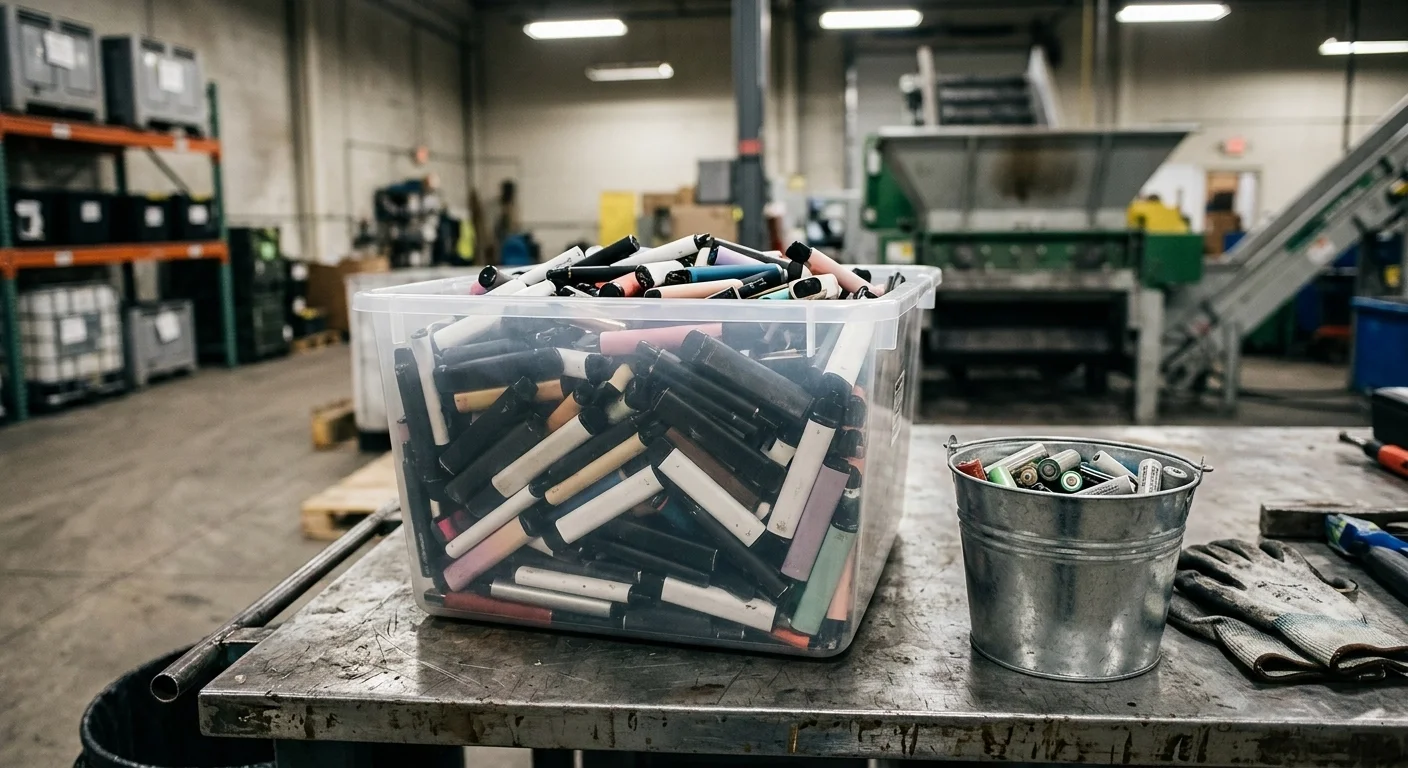
Disposable vapes contain lithium cells that cannot be shredded with the rest of the device. Crushing or puncturing a lithium battery in a shredder can cause a fire, and vape fires at waste facilities have become a widely reported problem.
Proper processing separates the battery from the device before destruction, or uses a process designed for battery-containing products. The batteries are then managed as universal waste or sent to a battery recycler. Flag battery-powered inventory before pickup so the right facility and process are booked from the start.
Transport Is Not Routine
Large shipments of devices containing lithium batteries are subject to hazardous materials transport rules. Packaging, marking, and documentation requirements apply, and a carrier that is not prepared for them can refuse the load. Damaged or leaking units add further restrictions, because damaged lithium batteries are subject to tighter transport controls.
Do Not Liquidate Restricted Product
Selling unauthorized or banned vape product to a liquidator does not remove it from commerce. It moves it into a channel where it is likely to be sold illegally, and enforcement agencies have shown that they are willing to trace products back to their source. Destruction with a documented record is the only exit that closes the matter.
How Vape Destruction Is Handled
- Counted intake by SKU and quantity, with damaged or leaking units segregated
- Separation of batteries from devices before any shredding takes place
- E-liquid managed according to its waste classification, which may require a hazardous waste manifest
- Plastic and metal components shredded and routed to recovery where possible
- Packaging destroyed so that branded cartons and labels cannot be reused
- A Certificate of Destruction itemized by product and quantity
Documentation to Retain
Keep the destruction record with any regulatory correspondence, seizure paperwork, or retailer notices that led to the decision. If the e-liquid was managed as hazardous waste, keep the manifest with it. Inventory adjustments for regulated tobacco products tend to receive close review, and the record needs to show exactly what happened to each unit.
Destroy Vape Inventory Safely
At inventorydestruction.com, vape and e-cigarette projects are handled with battery separation, waste classification for nicotine content, compliant transport, and a Certificate of Destruction issued on every job.
Confirm the waste classification of your inventory before scheduling. Contact our team today to arrange certified vape destruction with complete documentation across all 50 states.