Pharmaceutical inventory does not become ordinary waste just because it can no longer be sold. A pallet of expired tablets at a distribution center can contain three or four different regulatory categories at once, each with its own rules for who may handle it, how it moves, and what the destruction record has to say.
Manufacturers, wholesalers, repackagers, and third-party logistics providers deal with this at a scale that retail pharmacies never see. This guide covers how pharmaceutical inventory is sorted before destruction, what changes when controlled substances are involved, and what documentation closes the file.
Where Unsellable Drug Inventory Comes From
- Product that reached expiry in the warehouse or in the channel
- Recalls and market withdrawals initiated by the manufacturer or requested by FDA
- Returns from wholesalers, pharmacies, and hospitals that cannot be resold
- Damaged cases, temperature excursions, and broken cold chain shipments
- Short-dated stock that customers refuse to accept
- Discontinued formulations, superseded labeling, and obsolete packaging components
- Samples, validation batches, and stability lots that have served their purpose
Step One: Split the Inventory Into Streams
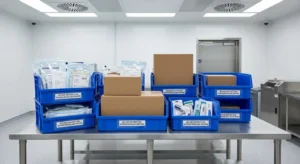
The single most important step in a pharmaceutical destruction project happens before anything is loaded. Mixed pharmaceutical waste is expensive and risky, because the most restrictive category in the load sets the rules for everything in it.
Controlled Substances
Products in DEA Schedules II through V cannot be handed to an ordinary destruction vendor. They move through a DEA registrant authorized to handle them, typically a reverse distributor, with the transfer documented on the forms DEA requires. Schedule II transfers use DEA Form 222 or its electronic equivalent.
Hazardous Waste Pharmaceuticals
Some drugs are regulated as hazardous waste under RCRA when they are discarded, either because they appear on the P or U lists or because they exhibit a characteristic such as ignitability or toxicity. Certain chemotherapy agents, some alcohol-based liquids, and products containing listed active ingredients fall into this group.
Non-Hazardous, Non-Controlled Pharmaceuticals
The largest share of most loads. These are not regulated as hazardous waste, but they still should not be landfilled intact or poured into a drain. Incineration is the standard destruction method for this stream.
Packaging and Labeling Components
Unused printed cartons, inserts, and labels carry lot numbers, NDCs, and brand marks. They should be destroyed rather than recycled intact, because genuine packaging is exactly what counterfeiters need.
How Controlled Substances Change the Project
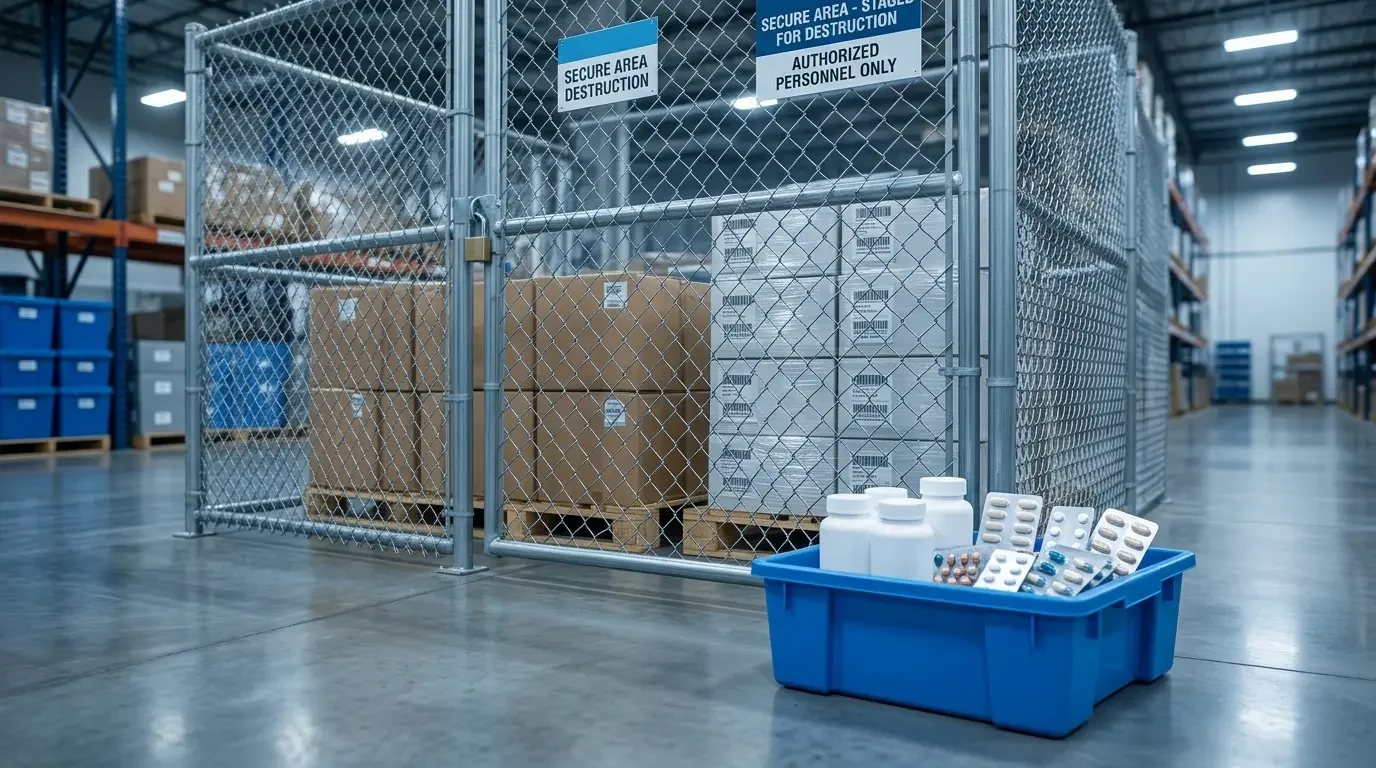
When scheduled product is in the inventory, it has to be identified, segregated, and secured before the rest of the load is scheduled. The DEA standard for destruction is that the substance must be rendered non-retrievable, meaning it is permanently altered in its physical or chemical state and cannot be transformed back into a usable controlled substance.
Registrants document destruction on DEA Form 41, and the destruction must be witnessed by two authorized employees of the registrant handling it. Your records need to show the transfer to that registrant, and your inventory records need to reconcile to what was transferred.
The practical rule is simple. Do not let controlled product travel with the general destruction load, even temporarily. Confirm the pathway with your DEA compliance lead before anything moves, because the requirements depend on your registration type and the schedules involved.
The Sewer Ban Applies to Everyone
Under EPA’s hazardous waste pharmaceuticals rule, disposing of hazardous waste pharmaceuticals down a drain or toilet is prohibited nationwide. The rule was written primarily for healthcare facilities and reverse distributors, but the principle is now the default expectation across the industry: no pharmaceutical inventory goes to the sewer, regardless of category. A destruction vendor that suggests otherwise is a vendor to avoid.
Destruction Methods by Stream
- Controlled substances: destroyed by an authorized DEA registrant to the non-retrievable standard
- Hazardous waste pharmaceuticals: shipped on a hazardous waste manifest to a permitted treatment facility, usually for incineration
- Non-hazardous pharmaceuticals: incineration at a permitted facility, with waste-to-energy used where appropriate
- Packaging, inserts, and labels: shredding to the point that lot codes and brand marks are unreadable
- Devices and combination products: segregated for handling of any batteries, sharps, or electronics before destruction
Recall Inventory Needs Its Own Record
When the destruction is part of a recall, the record has to tie back to the recall. That means quantities destroyed by lot number, reconciled against quantities recovered, so that the recall can be closed with FDA. A certificate that says a load of pharmaceutical product was destroyed without naming lots and quantities does not support a recall termination.
Documentation to Retain
A pharmaceutical destruction record should identify product by NDC, lot number, and quantity, state the method and the facility, name the date of destruction, and reference any manifest or DEA form that applied. Retain it with your inventory adjustment and, for recalls, with the recall file. Both are reviewed together during audits.
Schedule Pharmaceutical Destruction the Right Way
At inventorydestruction.com, pharmaceutical projects start with stream segregation, route each category to the appropriate authorized facility, and close with a Certificate of Destruction itemized by product and lot.
Confirm controlled substance requirements with your DEA compliance lead before scheduling. Contact our team today to arrange certified pharmaceutical destruction with complete documentation across all 50 states.