For years, products made with PFAS were sold without restriction across the United States. That has changed state by state, and the result is a category of inventory that was perfectly legal when it was made, shipped, and stocked, and is now prohibited from sale in the markets where it sits.
Cookware, cosmetics, apparel, textiles, carpets, cleaning products, and children’s products are all affected in at least one state. This guide covers how PFAS restrictions create unsellable inventory, what federal guidance says about destroying PFAS-containing materials, and how to handle the project so the record holds up.
How State Bans Turn Inventory Into a Liability
PFAS restrictions are being written at the state level, and they do not line up neatly with each other. Minnesota’s law, commonly known as Amara’s Law, has prohibited the sale of products with intentionally added PFAS in eleven categories since January 1, 2025, including carpets and rugs, cleaning products, cookware, cosmetics, dental floss, fabric treatments, juvenile products, menstruation products, ski wax, textile furnishings, and upholstered furniture. California and New York restricted PFAS in apparel and textiles beginning in 2025. Several other states have bans phasing in through 2027 and 2028, and some have broader prohibitions scheduled for later years.
The operational consequence is that a product can be legal in one state and prohibited in the next, and a distribution center serving several states can hold both at once. Product that cannot be sold where it is stocked has to be moved to a market where it is still legal, reformulated, or destroyed.
When Destruction Is the Right Answer
Moving restricted product into states where it remains legal is sometimes possible. It is also a short-term answer, because the list of restricting states keeps growing and retailers are increasingly applying the strictest standard across their entire network. Many national retailers will no longer accept PFAS-containing goods at all, regardless of the destination state.
Destruction becomes the right answer when the product has no compliant market left, when a retailer has rejected it, when reformulated replacements are already in the channel, or when the brand has made a public commitment to remove PFAS and cannot be seen to keep selling legacy stock.
Do Not Liquidate It
Selling restricted inventory to a liquidator is the obvious exit and the riskiest one. Product sold into a secondary channel does not stay in states where it is legal. It ends up on marketplaces shipping nationwide, and the brand on the box is still yours. If a state regulator or a consumer group identifies prohibited product in commerce, the question will be who put it there.
What EPA Guidance Says About Destroying PFAS
There is no federal regulation that prescribes a single destruction method for PFAS-containing consumer products. What exists is EPA’s interim guidance on the destruction and disposal of PFAS and materials containing PFAS, most recently updated in April 2024. It evaluates three main technologies:
- Thermal treatment, including hazardous waste combustors operating at high temperatures and long residence times
- Landfilling, with permitted hazardous waste landfills identified as offering the most controls to limit release
- Underground injection, which applies to liquid waste streams rather than finished goods
The guidance is not a mandate, and it acknowledges that the science on PFAS destruction efficiency is still developing. What it does give you is a framework for choosing a method that a reviewer will recognize as reasonable. Choosing the cheapest outlet without reference to it is the decision most likely to be questioned later.
Product Categories and How They Are Handled
Apparel and Outdoor Textiles
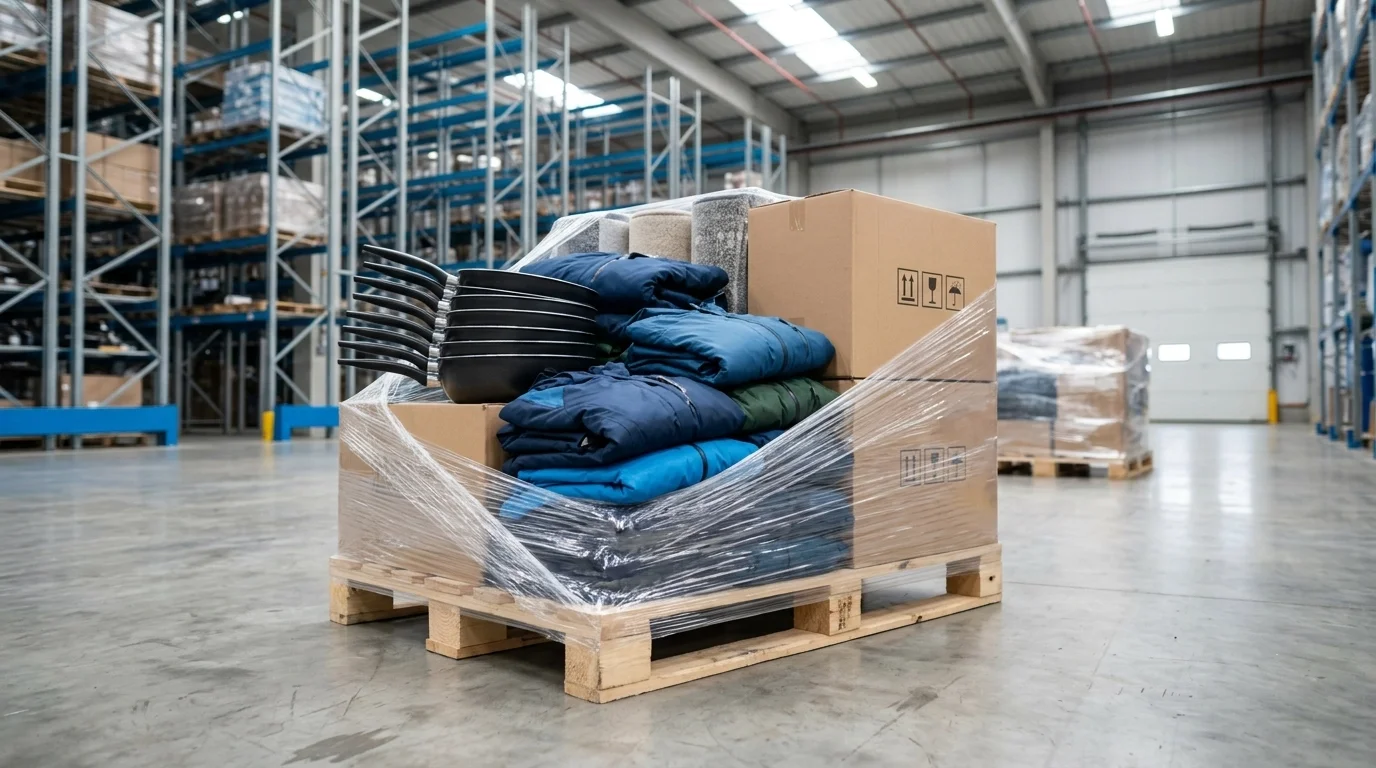
Water-repellent and stain-resistant finishes are the most common source of PFAS in clothing. Garments are destroyed rather than donated, since donation simply moves restricted product back into circulation.
Cookware and Kitchen Goods
Non-stick coated pans and bakeware combine metal with a coating. Destruction addresses the coating and the brand, and recovers the metal where the processing pathway allows it.
Cosmetics and Personal Care
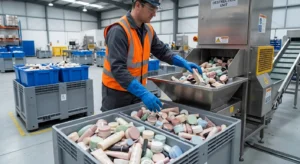
Some long-wear formulations have used PFAS ingredients. These products are depackaged so that contents and containers are handled separately.
Carpets, Rugs, and Upholstered Goods
Bulky, high-volume items that are expensive to move. Destruction is usually best arranged close to where the inventory sits rather than consolidated across states.
Packaging Components
Some food packaging and molded fiber products contain PFAS, and several states have restricted them separately from the products they hold.
Documentation to Keep
The destruction record should identify product by SKU and quantity, state the reason the inventory was removed from sale, name the destruction method and facility, and record the date. Keep it with any testing, supplier certifications, and state reporting filings that relate to the product. Several states require manufacturers to report PFAS-containing products, and the destruction record helps close out what you reported.
Clear Restricted Inventory With a Defensible Record
At inventorydestruction.com, PFAS-affected inventory projects are handled with method selection that follows current EPA guidance, secure chain of custody, and a Certificate of Destruction itemized by product on every job.
State requirements change frequently, so confirm what applies to your products with your regulatory team before scheduling. Contact our team today to arrange certified destruction with complete documentation across all 50 states.