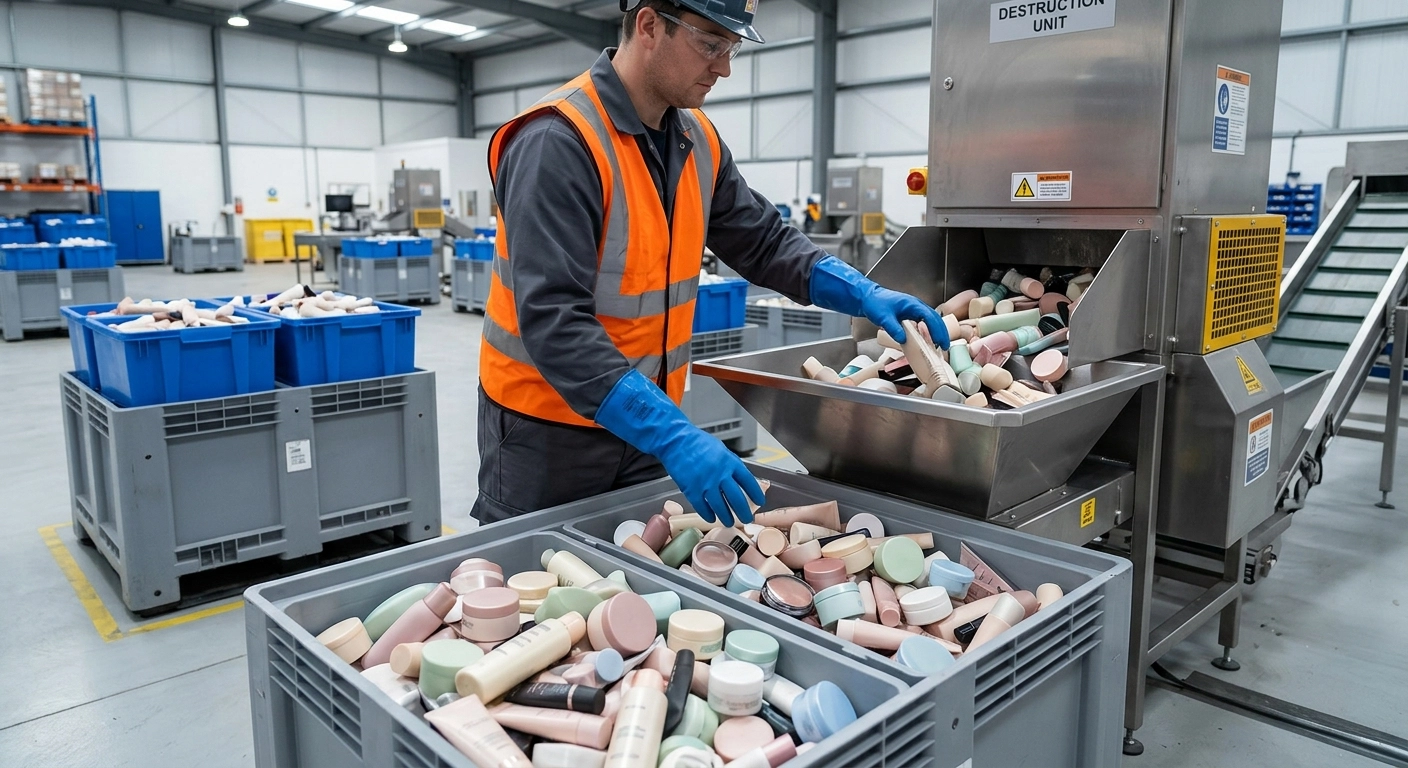
Cosmetics sit in an awkward regulatory position. They are applied directly to skin, hair, eyes, and lips, which makes contamination a genuine safety issue, but they are not regulated as tightly as pharmaceuticals at every stage. That gap leads some businesses to treat unsellable beauty inventory as ordinary trash, which is where the problems begin.
Expired formulations, recalled lots, damaged units, discontinued shades, testers, and promotional samples all need a documented destruction path. This guide covers what that path looks like and what regulators and auditors expect to see.
Why Cosmetics Carry Elevated Destruction Risk
Beauty products degrade in ways that are not always visible. Preservative systems break down after the expiration or period-after-opening date, allowing microbial growth in products that will be applied near the eyes or on broken skin. Emulsions separate. Active ingredients lose potency or convert into irritants. A consumer who buys expired product through a discount channel has no way of knowing any of this, and the brand on the package absorbs the consequences.
Cosmetics are also among the most heavily diverted categories in retail. Prestige beauty in particular commands strong resale value, which means discarded product is actively sought out and recovered from waste streams.
The Regulatory Picture
The FDA
The FDA oversees cosmetic safety and labeling, and its authority in this area expanded meaningfully with the Modernization of Cosmetics Regulation Act. Adverse event reporting, facility registration, and product listing obligations mean that when a safety issue triggers a market withdrawal, the company needs to demonstrate that affected lots were actually removed from commerce rather than quietly cleared out.
The EPA and Hazardous Waste Rules
A significant share of beauty inventory is not ordinary solid waste. Nail products, aerosols, alcohol-based fragrances, hair treatments, and certain solvent-containing formulas can meet the criteria for hazardous waste based on flammability, corrosivity, or specific listed constituents. Sending these to a general landfill exposes the business to environmental liability separate from any brand concern.
State Requirements
Several states apply stricter waste classification rules than the federal baseline, and some maintain their own restricted ingredient lists that affect how product must be handled at end of life.
What Compliant Cosmetic Destruction Includes
- Classification of the inventory by waste stream before anything moves, separating hazardous from non-hazardous product
- Secure transport under chain-of-custody documentation
- Depackaging that separates product from containers so each stream is handled correctly
- A destruction method matched to the formulation, typically incineration for flammable and aerosol product and grinding or chemical neutralization for creams, powders, and emulsions
- Destruction of branded packaging, cartons, and display units alongside the product itself
- Lot-level tracking tied to recall or withdrawal notices where applicable
- A Certificate of Destruction identifying what was destroyed, when, where, by which facility, and by what method
Testers, Samples, and Promotional Stock
Testers and gift-with-purchase samples are frequently overlooked because they were never sold and carry no revenue value. They still carry the brand name, they still expire, and they are frequently resold online as authentic product. Counter testers in particular have been open to the air and handled by many people, making them among the least suitable items to reach a consumer. Include them in the destruction scope rather than leaving them to be cleared out informally at store level.
Common Mistakes in Beauty Inventory Destruction
The most frequent error is treating all cosmetics as a single waste stream. A pallet containing aerosol hairspray, nail polish remover, lipstick, and powder foundation contains at least two and often three distinct regulatory categories, and a vendor that cannot separate them is not equipped for the job.
The second common failure is destroying product while recycling the packaging. Empty branded jars, pumps, and cartons are valuable to counterfeiters, who can refill them with unregulated product that then reaches consumers in genuine containers.
Get Certified Cosmetic Product Destruction Done Right
At inventorydestruction.com, cosmetic destruction projects are matched to the correct waste stream and destruction method for each product type, with branded packaging destroyed alongside the product and a Certificate of Destruction issued on every project.
Contact our team today to schedule certified cosmetic product destruction with complete documentation across all 50 states.