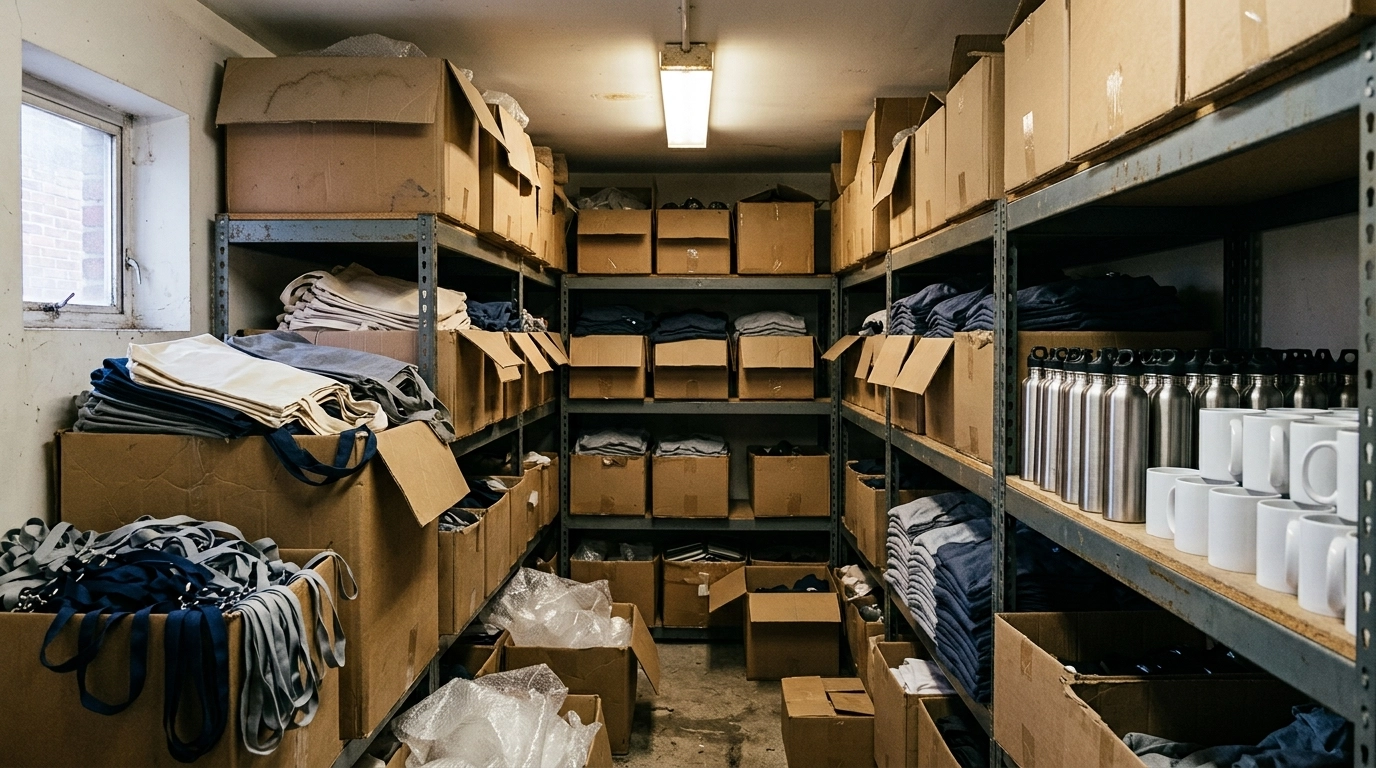
Every company that has been through a rebrand has the same closet. Boxes of shirts with the
old logo, pens with a phone number that no longer connects, tote bags from a conference in a
city the company no longer operates in, and several thousand branded water bottles nobody
can account for ordering.
It looks like clutter rather than risk, which is why it usually sits for years. The problem is that
promotional merchandise is the one category where your brand is printed directly onto an item
you have stopped controlling, and it does not expire on its own.
Why Obsolete Swag Cannot Simply Be Donated
Donation is the first instinct and it is right for some of this material. It is wrong for a surprising
amount of it, and the distinction is worth understanding before a pallet leaves the building.
Merchandise carrying a retired logo, an old tagline, a disconnected phone number, a dead URL,
or a certification you no longer hold does not become harmless when it is given away. It
circulates for years, and every item is a small piece of outdated communication with your name
on it. For regulated industries, a giveaway item printed with a claim you can no longer make is a
compliance artifact, not a keepsake.
Co-branded and licensed merchandise is a separate issue. When a sponsorship, partnership, or
licensing agreement ends, the right to circulate goods bearing the other party mark usually ends
with it, and the agreement frequently says so explicitly.
Common Triggers
• A rebrand, logo refresh, or name change that makes existing stock obsolete overnight
• A merger or acquisition that retires an entire brand identity
• A sponsorship, licensing, or partnership agreement reaching its end date
• Event cancellations that leave printed, dated merchandise with no audience
• Misprints, color errors, and vendor production mistakes
• Outdated URLs, phone numbers, office addresses, slogans, and certification marks
• Regulated claims printed onto giveaway items that are no longer accurate
• Trade show overruns nobody wants to ship home
Licensed and Co-Branded Goods Usually Have Contract Terms
Before anything is donated or liquidated, check what the agreement says. Licensing and
sponsorship contracts commonly include a sell-off period after termination, followed by an
obligation to destroy remaining inventory and certify that it was destroyed. Some reserve the
licensor right to observe the destruction.
This is the most common way a promotional inventory cleanout turns into a dispute. The goods
were given to employees or a charity in good faith, the counterparty found out, and the
agreement said destroy. A certificate that names the items and quantities closes that out
cleanly, and it costs far less than the argument.
Categories and How They Are Handled
Apparel, Headwear, and Bags
Embroidered and printed goods where the mark is integral to the item. Cutting out a logo patch
leaves a wearable garment, so these are shredded rather than de-branded.
Drinkware and Hard Goods
Bottles, mugs, tumblers, and desk items in mixed materials. Printing and laser marks survive
ordinary wear, which is exactly why the items circulate for so long. Material streams are
separated where recycling is possible after the branding is destroyed.
Electronics and Power Banks
Branded chargers, power banks, speakers, and USB drives contain lithium cells and sometimes
stored data. These need to be flagged separately at pickup rather than mixed into a general
pallet, because batteries cannot go through a shredder with everything else.
Printed Collateral, Signage, and Displays
Brochures, banners, pull-up stands, and booth graphics. Straightforward to destroy and
frequently the largest volume in a promotional cleanout.
Packaging, Gift Boxes, and Inserts
Branded boxes, sleeves, tissue, and cards. Intact branded packaging is more useful to a
counterfeiter than most people realize, so it is destroyed rather than baled and sold on.
The Donation Question, Answered Honestly
Donation is the right answer for current-branding, undamaged, non-safety merchandise where
you are comfortable with the logo circulating and no contract says otherwise. Plenty of
promotional inventory fits that description, and destroying it would be waste for its own sake.
Destruction is the right answer for retired branding, misprints, expired claims, co-branded goods
after termination, licensed property, and anything printed with information that is now wrong.
The test is simple: if you would not order it today, do not put it into circulation today.
Documentation to Keep
The record should identify items by description and quantity, name the method, date, location,
and facility, and be retained with the contract file where a licensing or sponsorship agreement
drove the decision. That is the version the counterparty will ask for.
Clear the Swag Closet Properly
At inventorydestruction.com, promotional and branded merchandise projects cover apparel,
hard goods, electronics, printed collateral, and packaging, with secure chain of custody and a
Certificate of Destruction issued on every project.
Contact our team today to schedule certified promotional merchandise destruction with
complete documentation across all 50 states.