Returns volume has outgrown the processes most businesses built for it. What began as an
occasional exception is now a continuous stream, and the sorting decision at the returns center
gets made hundreds of times a day by people working quickly under pressure to recover value.
Restocking is the default in most operations because it is the only outcome that looks like a
recovery on a report. For a meaningful share of returns, it is the wrong answer, and the cost of
getting it wrong is not the value of one unit.
Categories That Should Not Be Restocked
Opened Food, Beverage, and Supplements
Once a seal is broken, there is no way to establish what happened to the contents. This is not a
judgment about the individual customer. It is that the chain of custody ended when the product
left your control and cannot be reconstructed.
Used or Unsealed Cosmetics and Personal Care
Contamination risk is the entire concern, and it is invisible on inspection. A returned jar that
looks untouched and a returned jar that was used are the same object under a light.
Temperature-Sensitive Product
Anything that required refrigeration or a controlled range comes back having spent an unknown
period in an unknown environment. There is no test that recovers that information after the fact.
Safety-Critical Items
Car seats, helmets, protective equipment, climbing gear, and mounting hardware are designed
against a single-use or known-history assumption. A returned unit with an unknown history
cannot be certified as meeting it.
Tampered or Resealed Packaging
Packaging that has been opened and resealed is a signal, not an inconvenience. These units
should be pulled and destroyed rather than repackaged and returned to stock.
Product Returned During an Active Recall
Recalled units that come back through the returns stream need to be captured and destroyed
against the recall record, not graded and restocked. This happens more often than most
companies expect, because returns and recall processes usually run separately.
Returns Fraud Is a Sorting Problem, Not Just a Loss
Returns fraud is often discussed as a revenue issue. The larger risk is what it puts into your
inventory. Counterfeit units returned in place of genuine ones, box swaps, weight substitution,
and units returned with components removed all enter the same stream that feeds restocking
decisions.
When a counterfeit unit is restocked, you sell it to the next customer under your own brand, with
your own warranty behind it. The complaint, the review, and the liability all land on you, and
there is no supplier to charge back because the item never came from one.
Units that fail authentication should be destroyed. They should not be returned to the vendor,
liquidated, or held in a corner of the warehouse where they will eventually be swept into a pallet
going somewhere.
Why Liquidating Returns Carries Risk
Liquidation is attractive because it converts a loss into a small recovery. What it does
operationally is move product into channels you do not control while your brand remains
attached to it.
Defective returns sold through liquidation come back as warranty claims, support tickets, and
reviews on marketplaces you never sold through. For units connected to a safety issue or an
active recall, liquidation can put you back inside the recall you were trying to close, this time with
product you knowingly released.
Building a Destroy-or-Restock Policy That Holds Up
• Written criteria by product category, so the decision is not made unit by unit on judgment
alone
• The decision made at the returns center by trained graders rather than deferred to a
quarter-end cleanup
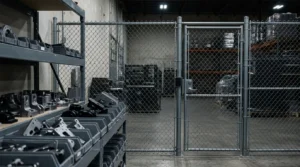
• A segregated destroy bin under access control, so units awaiting destruction cannot drift
back into sellable stock
• Scheduled destruction on a regular cadence rather than accumulation until the space
runs out
• Counts recorded by SKU before the product leaves the building
• A Certificate of Destruction retained with the inventory adjustment for the same period as
the rest of the file
The access control point deserves emphasis. Product marked for destruction that sits on an
open pallet for six weeks has a way of being repicked, especially during a stockout. A physically
separated, controlled area removes the possibility rather than relying on everyone
remembering.
Documentation Supports the Write-Off
Units removed from inventory have to be accounted for, and auditors ask what happened to
them. A destruction record tied to the inventory adjustment answers that question directly.
Without one, the adjustment is an assertion, and assertions are what get questioned.
Handle Returns That Should Not Come Back
At inventorydestruction.com, returns destruction projects are handled on a scheduled cadence
with secure chain of custody from pickup through destruction, counts recorded by SKU, and a
Certificate of Destruction issued as a standard deliverable on every job.
Contact our team today to schedule certified returns destruction with complete documentation
across all 50 states.