Power banks, e-bikes, scooters, vapes, smartwatches, toys, tools, and countless consumer electronics now ship with lithium batteries built in. When those products are recalled, returned, damaged, or simply unsellable, they cannot be thrown in a compactor or sent to a general shredder. Lithium battery product destruction needs its own plan, because the batteries create fire, transport, and environmental risks that ordinary inventory does not.
This guide explains why lithium battery products are different, how they must be packed and shipped, how destruction and recycling actually work, and what documentation to keep.
Why Lithium Battery Products Need Special Handling
Lithium-ion and lithium metal batteries store a lot of energy in a small space. When a cell is crushed, punctured, short-circuited, or overheated, it can go into thermal runaway: the cell heats rapidly, vents flammable gases, and can catch fire or explode. One damaged cell can ignite the cells around it.
That creates three practical problems for businesses disposing of these products:
- Fire risk in warehouses, trailers, compactors, and shredders
- Transport rules, because lithium batteries are regulated hazardous materials
- Environmental rules, because discarded batteries are generally managed as hazardous or universal waste rather than ordinary trash
Garbage trucks and recycling facilities report regular fires caused by lithium batteries that were thrown away with regular waste. A pallet of returned power banks sent to a landfill or general shredder is exactly the kind of load that starts those fires.
Products That Typically Contain Lithium Batteries
- Power banks, phone cases with batteries, and portable chargers
- E-bikes, e-scooters, hoverboards, and their battery packs
- Vapes and e-cigarettes
- Laptops, tablets, phones, and wearables
- Cordless tools and outdoor power equipment
- Toys, smart home devices, and personal care electronics
- Medical and fitness devices
Our guide to vape and e-cigarette destruction covers one of the most common battery-containing product categories in detail.
Shipping Lithium Battery Products for Destruction
Lithium batteries are regulated as hazardous materials for transport under the U.S. Department of Transportation Hazardous Materials Regulations. The rules depend on the battery type, size, condition, and whether the battery is shipped alone, packed with equipment, or contained in equipment.
Batteries Shipped for Disposal or Recycling
The regulations include specific provisions for batteries shipped to disposal or recycling. Batteries must still be protected against short circuits, typically by taping terminals or placing each battery in its own bag, and packed so they cannot shift or be damaged in transit.
Damaged, Defective, or Recalled Batteries
Batteries that are damaged, defective, or recalled for safety reasons face stricter packaging rules. Each battery generally has to be packed individually in a non-metallic inner package that fully encloses it, surrounded by non-combustible, non-conductive cushioning, inside packaging tested to a high performance level. Shipping papers and package marks must identify the batteries as damaged or defective.
Who Can Prepare the Shipment
Anyone who packages, marks, or signs shipping papers for hazardous materials must be trained under DOT rules. In practice, most businesses rely on their disposal partner to classify the load and arrange compliant packaging and transport.
If you are not sure how your products are classified, send us the product details and photos before anything is packed.
How Lithium Battery Products Are Destroyed
Battery Removal and Separation
Where batteries can be removed safely, they are separated from the product first. The batteries go to a battery recycler, and the rest of the product goes to shredding or electronics recycling. This is the safest and usually the most sustainable approach.
Battery Recycling
Lithium battery recyclers recover materials such as cobalt, nickel, lithium, and copper. Batteries are discharged or processed in controlled systems designed to manage thermal events.
Shredding Products With Embedded Batteries
When batteries cannot be removed, products must go to a facility equipped to process them, with fire suppression and controlled shredding. Sending these products to a standard shredder is not an option.
Brand Protection
Recalled or counterfeit battery products should be destroyed so they cannot be refurbished or resold. Destruction also covers packaging, chargers, and accessories, so branded components cannot be used to pass off other products. See our recalled product destruction page for how we handle recall projects.
Environmental Rules
When lithium batteries are discarded by a business, they are generally regulated under federal hazardous waste rules, and many businesses manage them under the streamlined universal waste rules for batteries. States can have stricter requirements. The key points are that batteries should not go into regular trash and that the business should be able to show where its batteries went. Our electronics destruction service covers devices, batteries, and data-bearing components together.
Storage Before Pickup
While products wait for pickup:
- Keep them in a cool, dry area away from heat sources and combustible materials
- Separate damaged, swollen, or leaking units from intact stock
- Do not stack heavy loads on battery products
- Keep products in original packaging where possible
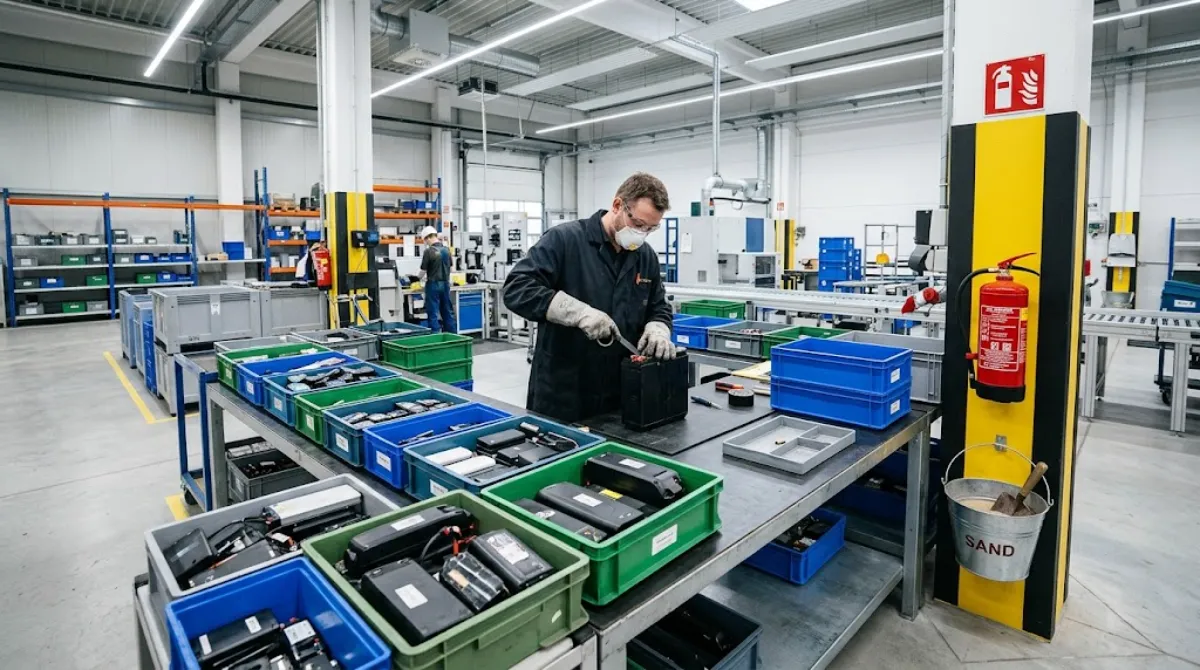
- Have a plan and the right extinguishing equipment for battery fires
Swollen or visibly damaged batteries should be isolated and reported to your disposal partner right away.
Documentation You Need
- A Certificate of Destruction listing the products, SKUs, quantities, and destruction method
- Records showing batteries were recycled or managed under the applicable waste rules
- Shipping papers for hazardous materials transport
- Pickup and chain of custody records
- Photos or video for recalls, insurers, or retail partners that require them
Frequently Asked Questions
Can lithium battery products go to a landfill?
They should not. Discarded lithium batteries are generally regulated as hazardous or universal waste for businesses, and they are a major cause of fires in waste trucks and facilities. They should be recycled or destroyed at a facility equipped to handle them.
Do batteries have to be removed before destruction?
Where it can be done safely, removing batteries is preferred. When batteries are built in, the products go to a facility designed to process them with fire controls.
How are damaged or swollen batteries shipped?
Damaged, defective, and recalled batteries require stricter packaging, with each battery individually packed in non-conductive, non-combustible material inside tested packaging. Tell us about any damaged units before pickup.
Can you handle e-bikes and large battery packs?
Yes. Large batteries have their own packaging and transport requirements. Send photos and battery specifications so we can plan the right packaging and route.
Related Reading
For EPA guidance on lithium battery recycling and disposal, see the EPA Used Lithium-Ion Batteries page.
Get a Quote for Lithium Battery Product Destruction
Whether you have a few pallets of returned power banks or a nationwide recall of battery-powered products, we coordinate compliant packaging, transport, destruction, and recycling at certified partner facilities. Contact our team with photos, product details, and quantities to get a quote.