Aerosol products are everywhere in retail and industrial supply chains: deodorants, dry shampoo, spray paint, cleaners, lubricants, cooking sprays, air fresheners, and pesticides. When a lot is recalled, expired, damaged, or discontinued, those cans cannot simply be crushed in a compactor. They are pressurized, many contain flammable propellants, and the contents themselves may be regulated. Aerosol destruction is the process of safely depressurizing, emptying, and recycling those cans with records that prove it was done properly.
Why Aerosol Cans Need Special Handling
An aerosol can holds a product and a propellant under pressure. Common propellants such as propane, butane, and isobutane are highly flammable. Crushing or baling full cans can cause fires and explosions, which is why waste haulers and landfills generally refuse large loads of unspent aerosols.
The contents add another layer. Spray paints and solvent-based cleaners can be ignitable or toxic. Pesticide aerosols carry their own label disposal instructions. Even personal care products can count as ignitable hazardous waste when they are discarded in bulk.
The Universal Waste Rule for Aerosol Cans
In 2019 the EPA added hazardous waste aerosol cans to the federal universal waste program. Universal waste rules are a streamlined set of requirements meant to make it easier to collect and recycle common hazardous items such as batteries, lamps, and pesticides. Under this framework, businesses can accumulate aerosol cans under simpler labeling and storage requirements and send them to destination facilities for recycling.
You can read the federal overview on the EPA universal waste page. Keep in mind that states adopt these rules on their own schedules, and some states have their own aerosol requirements, so the rules at your warehouse may differ from the federal baseline.
Common Reasons for Aerosol Destruction
- Product recalls for contamination, faulty valves, or labeling errors
- Expired product such as sunscreen sprays with dated active ingredients
- Damaged or dented cans that cannot be shipped safely
- Discontinued formulas and seasonal packaging
- Returns that cannot be resold
- Overstock at 3PLs and distribution centers
How Aerosol Destruction Works
Sorting and profiling
The facility needs to know what is in the cans. Safety data sheets, SKU counts, and photos let the destruction partner confirm the waste profile and the right processing route. Aerosols mixed with other products should be separated before pickup when possible.
Transport
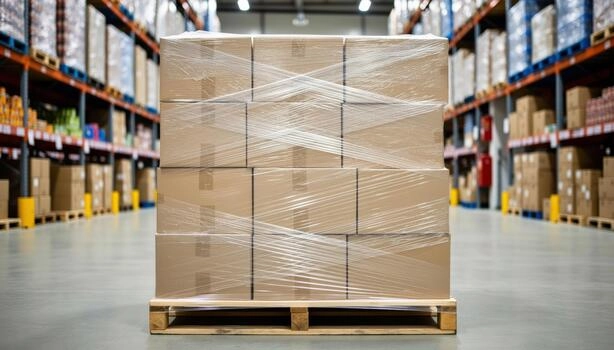
Aerosols are typically shipped boxed on pallets. Depending on quantity and contents, the load may move as regulated hazardous materials, which means proper packaging, labeling, and shipping papers. The pickup is planned around those requirements.
Puncturing and draining
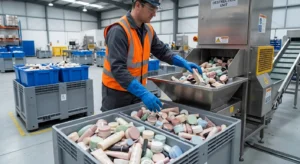
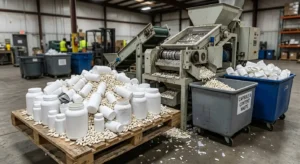
At the facility, cans are punctured in specialized equipment designed to capture the propellant and liquid contents safely. This equipment controls vapors and reduces fire risk. Recovered liquids are typically sent to fuel blending or other permitted treatment, and captured propellant is managed according to the facility’s permits.
Metal recycling
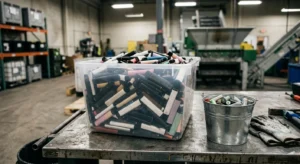
Once emptied, steel and aluminum cans are recycled as scrap metal. This is one of the reasons aerosols were added to the universal waste program: the metal has real recycling value once the can is safely emptied.
Documentation
You receive a Certificate of Destruction listing quantities, the processing method, and the date.
Brand Protection for Aerosol Products
Name-brand aerosols resell easily on discount channels. If a recalled or defective lot is diverted, consumers may be injured and your brand carries the blame. Destruction should include a chain of custody from your dock to the facility, and many brands ask for photos of cans being processed. See our guide to destroying recalled products for recall-specific steps.
Tips Before You Schedule a Pickup
- Keep aerosols upright, boxed, and away from heat sources
- Do not puncture, crush, or bale cans yourself
- Separate leaking cans and place them in compatible containers
- Gather safety data sheets for every formula
- Take clear photos of pallets, labels, and any damage
What Affects the Cost of Aerosol Destruction
Pricing depends on the number of pallets, the type of contents, whether the load ships as hazardous materials, and the distance to a facility that can process aerosols. Mixed loads that need sorting cost more than uniform pallets. You can learn more about general pricing in our post on inventory destruction cost.
Frequently Asked Questions
Can empty aerosol cans go in regular recycling?
Truly empty cans are often accepted by metal recyclers, but cans with remaining product or pressure should go through a facility that can puncture and drain them safely.
Do all states follow the federal aerosol universal waste rule?
No. States adopt the rule on their own timelines, and some have their own requirements. The destruction facility will confirm what applies.
Can you destroy aerosol pesticides?
Yes, but pesticide aerosols follow label instructions and pesticide rules, so they should be identified separately in your inventory list.
How long does an aerosol destruction job take?
Most jobs are scheduled within a few business days of receiving photos, counts, and safety data sheets. Processing time depends on volume.
Related Reading
Get a Quote for Aerosol Destruction
We coordinate compliant pickup, processing at certified partner facilities, and the documentation your EHS and compliance teams need. Explore our expired product destruction services or send us photos and counts for a quote.