Dietary supplements sit between food and drugs in the regulatory system, and destruction projects reflect that. The product looks like a pharmaceutical, it is regulated more like a food, and the reasons it becomes unsellable range from simple expiry to discovering an undeclared drug ingredient in a finished lot.
Supplement brands, contract manufacturers, and distributors all end up holding inventory that cannot be sold. This guide covers why supplement inventory is destroyed, how different formats are handled, and what documentation the brand should keep.
Why Supplement Inventory Becomes Unsellable
- Product past its labeled expiration or best-by date
- Lots that failed identity, potency, or contaminant testing
- Undeclared ingredients, including allergens or drug ingredients
- Recalls initiated by the brand or requested by FDA
- Label claims that need to be changed after regulatory feedback
- Retailer or marketplace delisting
- Damaged packaging, broken seals, and moisture exposure
- Discontinued formulas and obsolete packaging components
The Regulatory Frame
Dietary supplements are regulated by FDA under the Dietary Supplement Health and Education Act, with manufacturing governed by current good manufacturing practice requirements in 21 CFR Part 111. Those requirements include procedures for handling product that fails specifications, including holding it under control until a decision is made and documenting what happens to it.
A supplement found to contain an undeclared drug ingredient, a contaminant, or a dangerous ingredient is adulterated. Adulterated product cannot be sold, and it should not be reworked into another product without a documented and justified process.
Why Donation and Liquidation Are Risky
Expired or failed-test supplements are attractive to discount sellers, especially on online marketplaces. Once sold, they continue to carry your label and your lot codes. If a consumer is harmed, the complaint will reach you regardless of who sold the product.
Product connected to a recall or an adulteration finding should never leave your control in sellable condition. The safest path is destruction that leaves nothing that looks like a retail unit.
Formats Drive the Destruction Method
Capsules and Tablets in Bottles
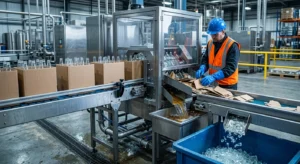
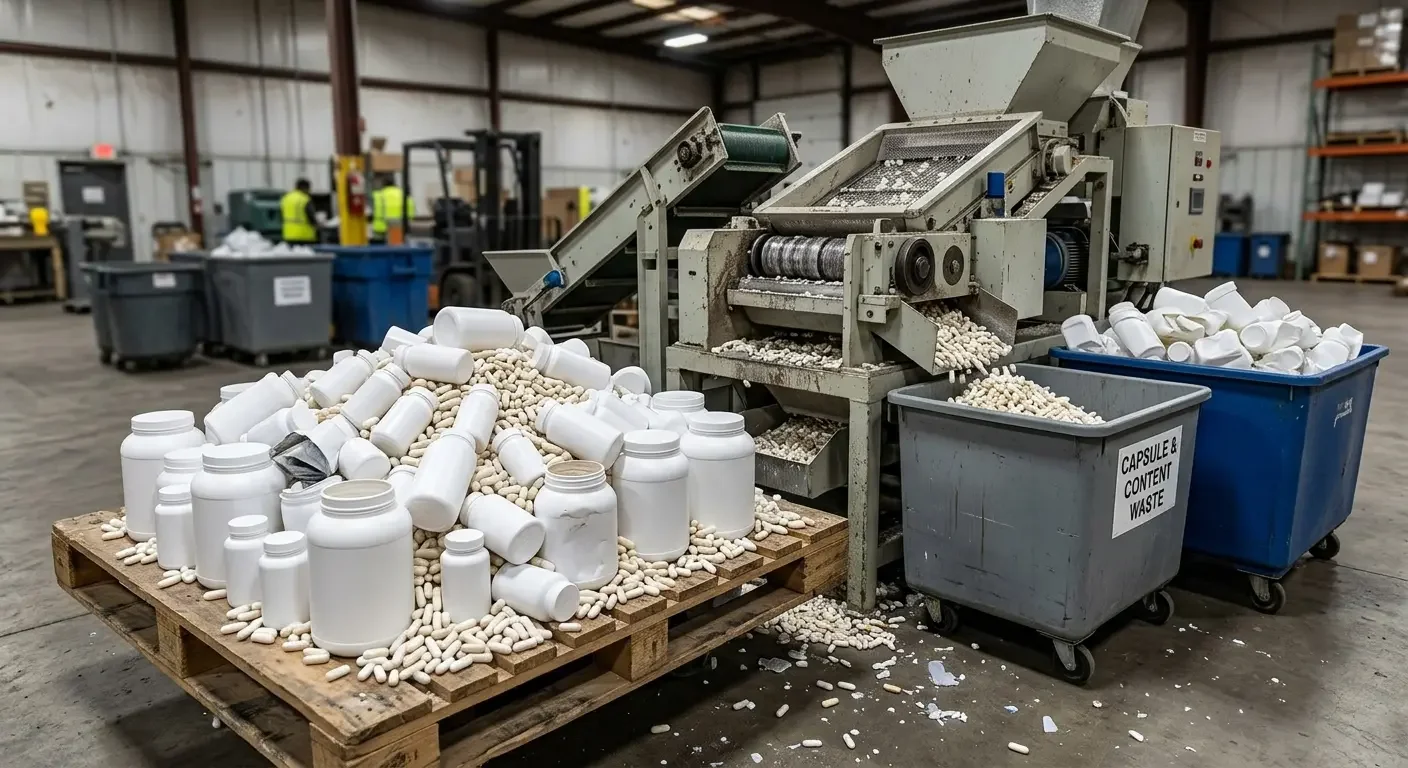
The most common format. Industrial depackaging separates the contents from bottles, caps, desiccants, and seals, so each stream can be handled appropriately.
Powders and Protein Products
Large tubs and bags of powder are high in weight and often organic. The contents can sometimes be routed to anaerobic digestion or other organics outlets when the reason for destruction allows it. Product that failed for a contaminant needs a more restrictive outlet.
Gummies and Soft Chews
These behave like confectionery and are handled with food-grade depackaging.
Liquids and Shots
Liquid contents are separated from containers. Some liquid supplements contain alcohol, which may affect how they are classified for disposal.
Packaging, Labels, and Inserts
Labels and cartons carry lot codes, claims, and brand marks. They are destroyed rather than recycled intact so they cannot be used to package counterfeit product.
Undeclared Drug Ingredients Need Extra Care
When a supplement is found to contain an undeclared pharmaceutical ingredient, the product may need to be handled more like a pharmaceutical than a food. In some cases the ingredient could cause the waste to be classified as hazardous. Confirm classification with your regulatory and environmental compliance teams before shipping product for destruction.
Documentation to Retain
The record should identify product by SKU, lot, and quantity, state the reason for destruction, name the method and facility, and record the date. Keep it with your batch records and any recall or complaint file. Under cGMP, you need to show what happened to product that failed specifications, and this record is how you show it.
Destroy Supplement Inventory With Confidence
At inventorydestruction.com, supplement projects are handled with depackaging, routing matched to the reason for destruction, and a Certificate of Destruction itemized by lot on every job.
Contact our team today to schedule certified supplement destruction with complete documentation across all 50 states.