Private label programs are great business until they end. When a retailer discontinues a store brand line, switches suppliers, or rebrands its packaging, the manufacturer is often left holding finished goods, packaging, and labels printed with another company’s name. That inventory usually cannot be sold anywhere else. Private label product destruction is how manufacturers clear that stock while honoring the contract and protecting both brands.
Why Private Label Inventory Becomes Unsellable
Private label goods carry the retailer’s brand, not yours. Most supply agreements prohibit the manufacturer from selling branded product to anyone else, including liquidators and discount outlets. Common situations include:
- The retailer ends the program or moves it to another supplier
- Packaging or branding is redesigned, making old stock obsolete
- The retailer cancels a purchase order after production is complete
- A formula or specification change makes existing stock noncompliant
- Product is rejected for quality issues and cannot be reworked
- Seasonal private label lines miss their selling window
In each case, the goods may be perfectly good products, but they cannot legally or contractually be sold under that label.
Read the Contract First
Before scheduling destruction, review the supply agreement or vendor manual. Many retailers spell out exactly what happens to branded goods and packaging at the end of a program. Look for:
- Who owns finished goods and packaging that were produced but not shipped
- Whether the retailer will buy back remaining stock
- Whether destruction must be witnessed or certified
- Whether relabeling and selling under your own brand is permitted
- What documentation the retailer requires and by when
Some retailers will cover destruction costs for product made to their forecasts. Others expect the manufacturer to handle it. Clear records of what was destroyed make that conversation easier.
Destroy, Relabel, or Repurpose?
Destruction is not always the only option. Depending on the product and the contract:
- Relabeling may work for products in plain containers where only the label carries the retailer’s brand. It requires retailer approval and labor to remove and replace labels.
- Rework can turn bulk ingredients or unpackaged goods into product for other customers.
- Donation is sometimes allowed if the retailer approves and the brand is removed or obscured.
- Destruction is the right call when packaging is printed directly, when the product has quality issues, or when the retailer requires it.
For many manufacturers, the labor cost of relabeling is higher than the value of the product, which makes destruction the practical choice.
How Private Label Destruction Works
Inventory and photos
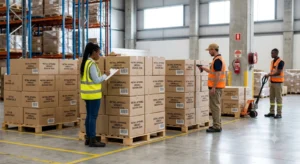
List finished goods by SKU and count, and include any printed packaging, labels, shrink sleeves, and display materials. Photos of the pallets help confirm the quote and the handling method.
Pickup and chain of custody
Product is collected from your plant or warehouse and moved under a documented chain of custody. That matters because branded goods have resale value and could embarrass the retailer if they surface.
Destruction
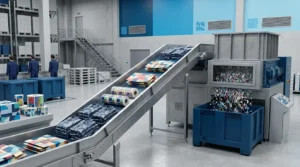
At certified partner facilities, products are shredded, crushed, or depackaged depending on what they are. Food and beverages go through depackaging so organics can be diverted. Consumer goods and packaging are shredded so the brand is no longer identifiable.
Packaging and label destruction
Do not forget unused packaging. Printed cartons, labels, and pouches with the retailer’s logo should be destroyed too, because they could be used to pass off counterfeit product. Our article on branded packaging and label destruction covers this step.
Certificate of Destruction
You receive a Certificate of Destruction listing quantities and methods. Many retailers ask for a copy to close out the program.
Protecting Both Brands
When a retailer’s store brand appears on a flea market table or online marketplace, customers blame the retailer, and the retailer looks to the manufacturer. That can cost you future business. A documented destruction process with photos, counts, and a certificate is the simplest way to show the retailer that the stock is gone. For more on why this matters, see our post on gray market protection.
Accounting for the Loss
Destroyed private label inventory is usually written off. Good documentation, including counts, cost basis, and the certificate, makes the write-off easier to support. Our guide on inventory write-off documentation lists what accountants usually ask for. Confirm the tax treatment with your own advisor.
Frequently Asked Questions
Can we sell private label product if we remove the labels?
Only if the contract allows it and the product itself is not distinctive to the retailer. Get written approval first.
Who pays for destruction?
It depends on the agreement. Some retailers pay for goods made to their forecast; others leave the cost with the supplier.
Can the retailer witness the destruction?
Yes. Destruction can be witnessed in person or by live video, and photos can be attached to the certificate.
What about raw materials and work in progress?
Unbranded raw materials can often be used for other customers. Branded work in progress should be destroyed along with finished goods.
Related Reading
Get a Quote for Private Label Product Destruction
We coordinate pickup, destruction at certified partner facilities, and documentation your retail partner will accept. See our consumer goods destruction services or send photos and counts for a quote.