
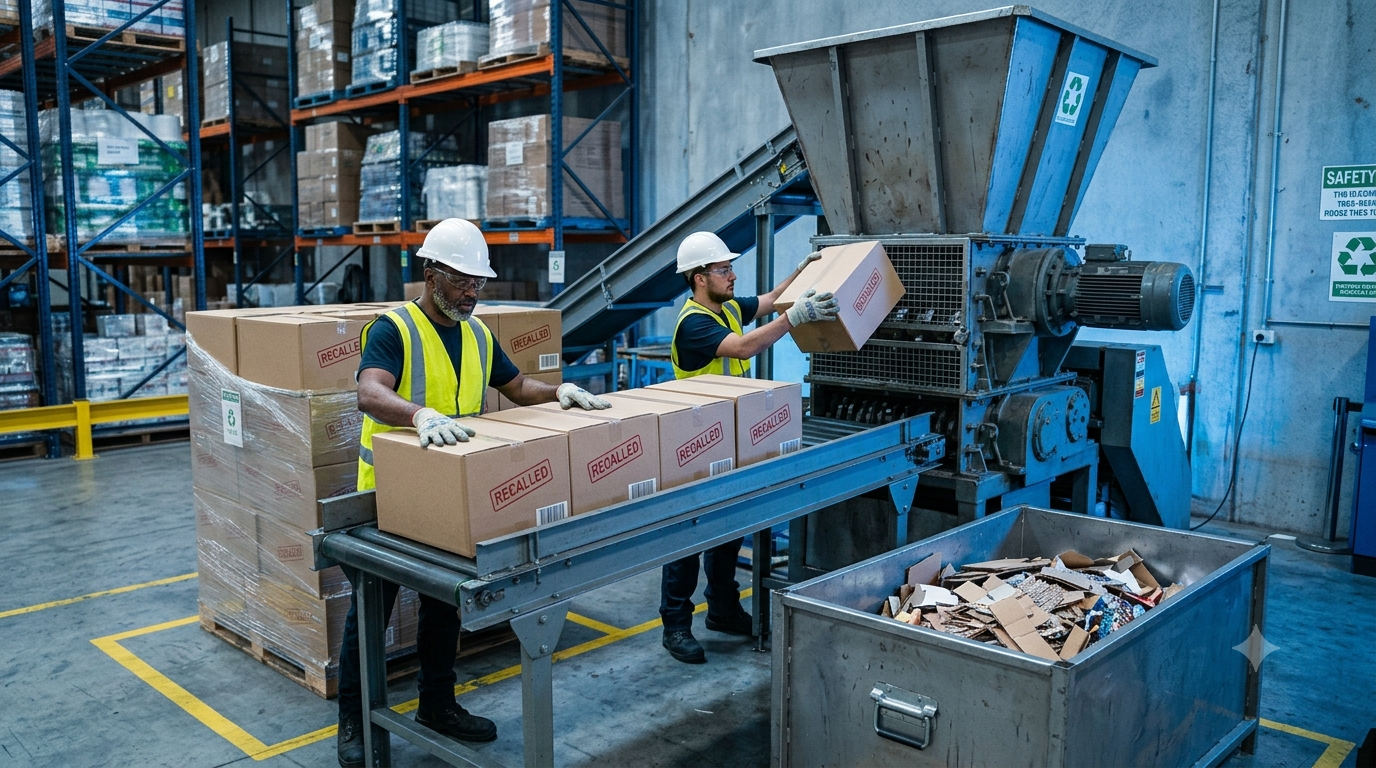
A product recall is one of the most time-sensitive and legally demanding events a business can face. The moment a recall is announced, recalled inventory sitting in your warehouses, in transit, or on retail shelves becomes an active liability. Regulators expect swift action, and how you handle destruction can affect everything from enforcement outcomes to litigation exposure.
Destroying recalled products correctly is not just about getting rid of them. It is about documenting the process to a standard that satisfies regulators, insurers, and legal counsel. This guide walks through the right way to do it.
Why Recalled Product Destruction Is Different
Recalled products carry a unique burden: regulators require documented proof that they have been permanently removed from commerce and cannot reach consumers. This is fundamentally different from ordinary inventory clearance. A recalled product that resurfaces, whether through a gray market reseller, an improperly controlled donation, or a salvage operation, can dramatically escalate the consequences of a recall.
That is why certified destruction, not casual disposal, is the standard for recalled goods. Destruction renders the product permanently unrecoverable, and the accompanying documentation proves it.
Regulatory Requirements by Agency
Different agencies oversee recalls depending on the product category. Each has documentation expectations:
CPSC (Consumer Product Safety Commission)
For recalled consumer products, toys, juvenile products, and appliances, the CPSC requires evidence that recalled units were destroyed and cannot re-enter the marketplace. A Certificate of Destruction documenting units by SKU and quantity is the standard proof.
FDA (Food and Drug Administration)
For recalled food, beverages, pharmaceuticals, cosmetics, and medical devices, the FDA expects compliant destruction with full recordkeeping under frameworks like the Food Safety Modernization Act. Documentation by lot number is often essential.
USDA (United States Department of Agriculture)
For recalled meat, poultry, and certain agricultural products, the USDA requires documented destruction that prevents the product from re-entering the food supply
The Correct Step-by-Step Process
A compliant recall destruction follows a structured chain of custody from start to finish:
- Identify and isolate all recalled inventory by SKU and lot number to prevent accidental sale or shipment.
- Document the recalled inventory in a manifest before anything is moved.
- Engage a certified destruction provider and establish a destruction timeline that satisfies regulatory expectations.
- Collect the inventory under strict chain-of-custody protocols, logging every item at the point of collection.
- Transport securely to a certified destruction facility, maintaining custody throughout.
- Destroy using the method appropriate to the product category, with witnessed destruction where required.
- Issue a Certificate of Destruction documenting every item, the method, date, facility, and authorized signature.
Why Speed Matters in a Recall
Regulatory agencies and class action plaintiffs pay close attention to how quickly a company acts once a recall is announced. Delays can be interpreted as negligence and can expand both regulatory scrutiny and legal exposure. A rapid-response destruction capability, with the ability to schedule pickups on short notice and provide documentation on an accelerated timeline, is a meaningful risk-reduction tool.
For multi-location recalls, coordinating nationwide logistics under a single project with consolidated documentation prevents gaps and ensures a consistent compliance record across every facility.
Brand Protection Beyond Compliance
Compliance is the minimum. Recalled product destruction is also a brand protection measure. Recalled goods that resurface in secondary marketplaces or gray market channels can cause repeat consumer harm, generate fresh negative publicity, and undermine the corrective action the recall was meant to achieve. Certified destruction with documentation eliminates this risk permanently.
Get Rapid-Response Recall Destruction
At inventorydestruction.com, we provide rapid-response recalled product destruction for manufacturers, retailers, distributors, and brand owners across all 50 states. We coordinate nationwide logistics, satisfy CPSC, FDA, and USDA documentation requirements, and issue a Certificate of Destruction on every project. When a recall starts the clock, contact our team immediately to begin coordination.