When a toy or children’s product is recalled, getting the word out is only half the job. Every unit pulled back from stores, warehouses, and customers has to end up somewhere it can never be resold. Toy recall destruction is how manufacturers, importers, and retailers close out a CPSC recall with proof that the product is gone.
This guide covers why recalled children’s products need controlled destruction, how the process fits into a CPSC corrective action, what to do with batteries and electronics inside toys, and what records to keep.
Why Recalled Toys Cannot Be Resold or Donated
Under the Consumer Product Safety Act, it is unlawful to sell, offer for sale, or distribute a product that is subject to a voluntary corrective action or a mandatory recall. That applies to everyone in the chain, including liquidators, discount stores, and online marketplace sellers. Donating recalled products to charities or thrift stores is not a safe workaround either, because the product still ends up in a child’s hands.
That leaves recalled children’s products with one practical path: documented destruction that makes them unusable and keeps them out of secondary markets.
Common Reasons Children’s Products Are Recalled
Toy and juvenile product recalls are usually tied to one of these hazards:
- Lead content in paint, coatings, or substrates above federal limits
- Phthalates in plastic components above allowed levels
- Small parts that create a choking hazard for young children
- Button cell or coin batteries that are not properly secured
- High-powered magnets that can be swallowed
- Strangulation, entrapment, or fall hazards in juvenile furniture and sleep products
Many of these hazards cannot be fixed with a label change or a repair kit, so destruction is often part of the remedy. Our recalled product destruction service is built for exactly this kind of project.
How Destruction Fits Into a CPSC Recall
Most children’s product recalls are voluntary corrective actions agreed between the company and the CPSC. The corrective action plan explains what consumers should do, how the company will provide a refund, replacement, or repair, and what happens to returned and undistributed product.
During the recall, firms report progress to the CPSC, including how many units have been corrected. CPSC field staff may monitor the disposal or destruction of recalled product, either by observing it in person or through written verification. That makes the destruction record part of the recall file, not just an internal note.
Before scheduling destruction, confirm with your recall team or counsel:
- Which units are covered: lot numbers, date codes, and SKUs
- Whether any units must be held as samples or evidence
- Whether the CPSC or a retail partner wants to witness the destruction or receive photos and video
- What the corrective action plan says about returned units
Batteries, Electronics, and Magnets
Many modern toys contain lithium cells, button batteries, circuit boards, speakers, and screens. These components need to be handled correctly during destruction:
- Lithium and button batteries are removed or managed separately to prevent fires during shredding and transport
- Electronic components are routed to e-waste recycling where possible
- Magnets and small parts are destroyed so they cannot be recovered and reused
Plan for this up front. A shipment of electronic toys sent to a general shredder without battery management can create a serious fire risk. Our electronics destruction service covers products with embedded batteries and circuit boards.
Destruction Methods for Children’s Products
The right method depends on the materials and the hazard.
Shredding and Grinding
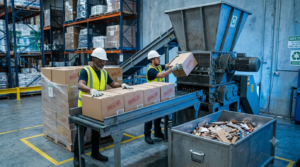
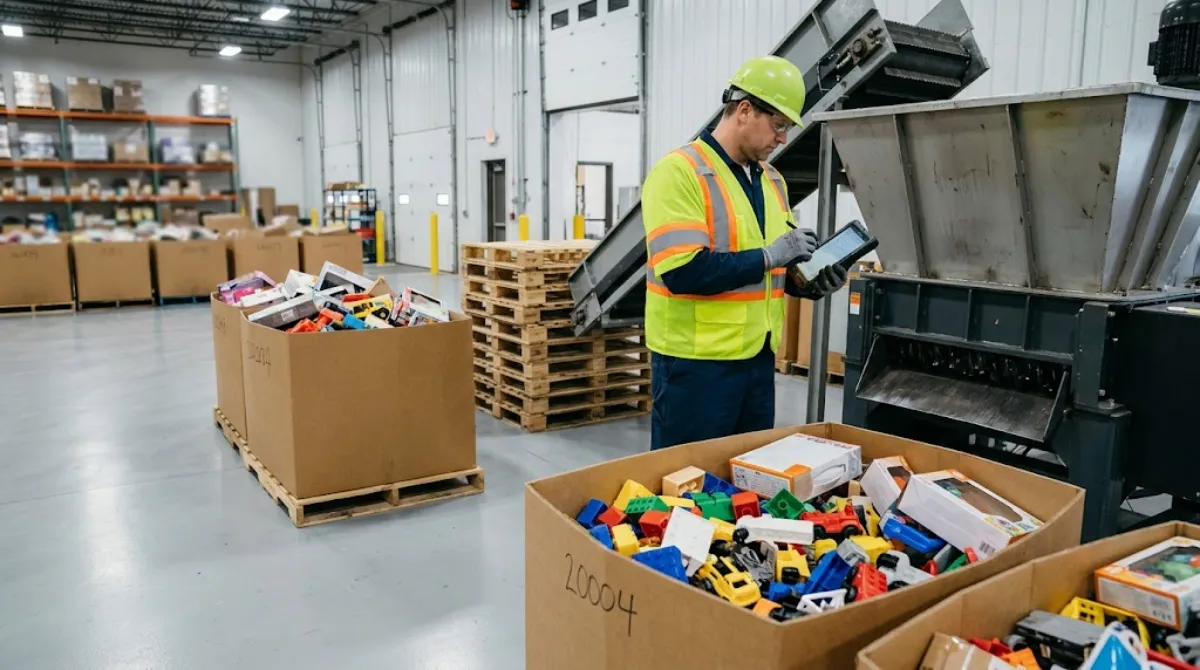
Plastic toys, ride-ons, and juvenile products are commonly shredded or ground so they cannot be reassembled. Clean plastic regrind can sometimes be recycled, which helps with sustainability reporting.
Waste-to-Energy
Mixed-material items, plush toys, and products with packaging attached often go to waste-to-energy facilities, which ensures complete destruction.
Disassembly and Separation
Larger items such as cribs, strollers, and high chairs may be disassembled so that metal frames can be recycled and fabric and plastic components destroyed.
Packaging and Branded Materials
Retail packaging, instruction manuals, and branded displays should be destroyed along with the product. Intact packaging with the brand and UPC can be used to pass off counterfeit or refurbished units as new.
Returned Units vs. Undistributed Stock
Recalled children’s products usually come from two places, and each needs a different plan.
Undistributed Inventory
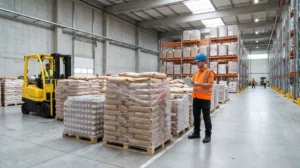
Product still sitting in your warehouse, a 3PL, or a distribution center is the easiest to control. It is usually palletized, counted, and in one or two locations. This stock should be quarantined and labeled as soon as the recall is decided, so it is not picked and shipped by mistake.
Returned and Retrieved Units
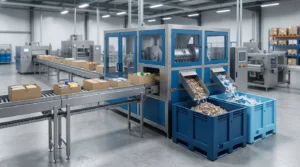
Units returned by consumers or pulled from store shelves arrive in mixed condition and in small quantities. Retailers often consolidate them at return centers. These loads need careful counting, because they feed directly into the correction numbers reported to the CPSC.
Keeping the two streams separate in your records, even if they are destroyed together, makes reconciliation much easier at the end of the recall.
Documentation You Need
For a recall, the destruction record should be detailed enough to reconcile with your recall reporting. A complete file includes:
- A Certificate of Destruction with product names, SKUs, lot or date codes, and unit counts
- Pickup and chain of custody records from each warehouse, store, or return center
- Weights or pallet counts that tie back to your returned and undistributed inventory
- The destruction method, date, and facility
- Photos or video, especially when the CPSC or a retailer asks for verification
Keep these records with the rest of your recall file. They support your progress reports and your inventory write-off.
How the Process Works
- Send us photos of the product and packaging, the recall details, and the pallet count and locations.
- We confirm the destruction method with our certified partner facilities, including battery handling, and send a quote.
- We schedule pickup from your warehouses, stores, or return centers, consolidating loads where it saves cost.
- The product is destroyed, and you receive your Certificate of Destruction with supporting records and media.
See our how it works page for more detail.
Frequently Asked Questions
Can recalled toys be sold to a liquidator?
No. Selling or distributing a recalled product is prohibited under the Consumer Product Safety Act, and that includes liquidation channels. Recalled toys should be destroyed or handled exactly as your corrective action plan specifies.
Does the CPSC require proof of destruction?
The CPSC monitors recall progress and may verify disposal or destruction in person or in writing. A detailed Certificate of Destruction, with photos where requested, is the standard way to provide that proof.
What happens to the batteries inside recalled toys?
Batteries should be removed or managed separately before shredding to prevent fires. They are then sent to battery recycling, and the destruction record notes how they were handled.
Can we destroy toys that are only partly affected by a recall?
Yes. If only certain lots or date codes are affected, the destruction can be limited to those units, as long as they are clearly identified and counted. Mixing affected and unaffected stock without clear records makes the recall harder to reconcile.
Related Reading
For current toy and children’s product recalls, see the CPSC Recalls page.
Get a Quote for Toy Recall Destruction
Whether you are clearing a few pallets of returned units or running a nationwide recall across multiple distribution centers, we coordinate pickup, destruction at certified partner facilities, and documentation that supports your recall file. Contact our team with photos and the recall details to get a quote.