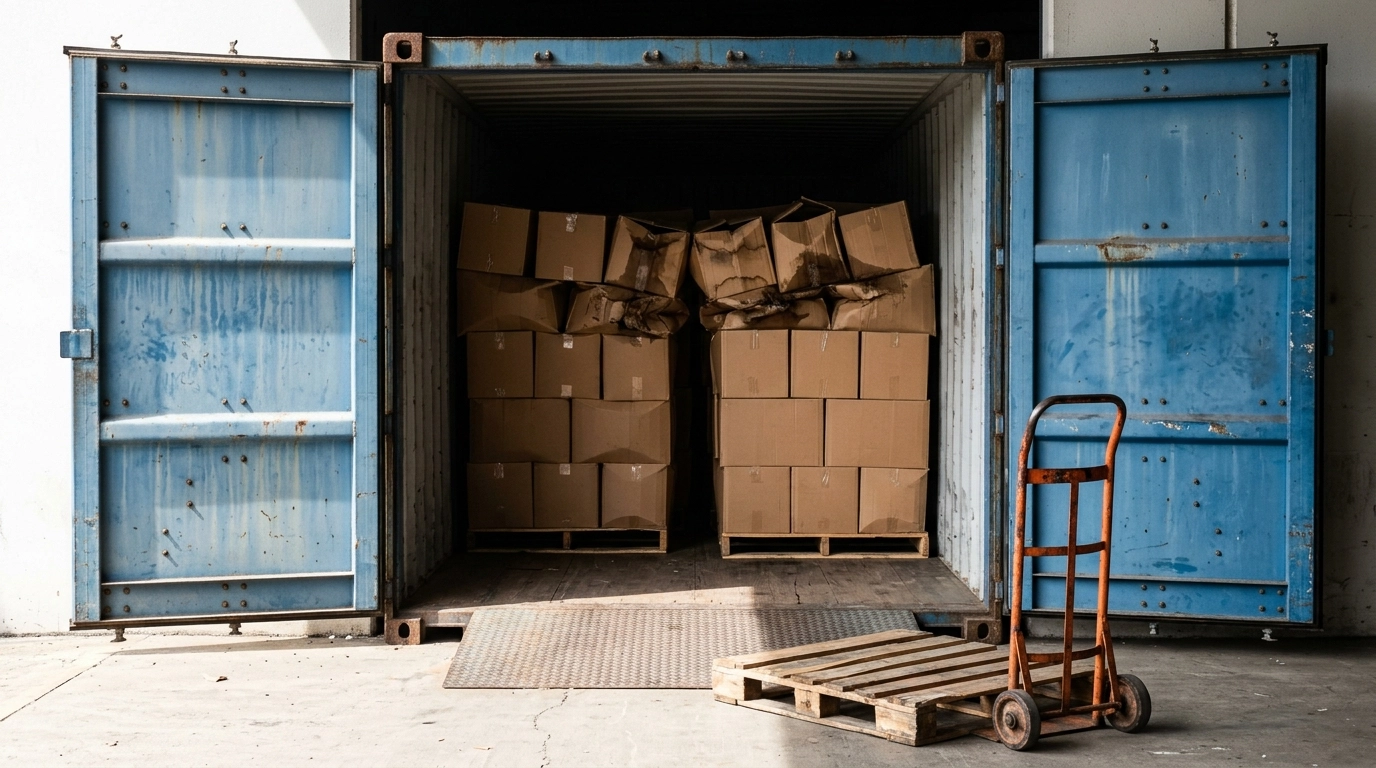
A full container load of product you cannot sell is a different kind of problem than a few pallets in
the back of a warehouse. The volume is larger, the contents are often mixed, and unlike
warehouse inventory, a container comes with a clock attached. Free time runs out, demurrage
starts at the terminal, per diem starts on the equipment, and the container itself has to go back.
That combination means the fastest correct decision usually beats the perfect decision. This
guide covers what drives container-scale destruction, how the work is actually done, and why
liquidating the load tends to create a second problem rather than solving the first.
The Clock Is the First Constraint
Every day spent deliberating has a price. Demurrage accrues while the box sits at the terminal,
per diem accrues once it has been picked up, and both are charged against a shipment that has
already stopped being profitable. Businesses routinely spend more on storage and equipment
charges arguing about a bad load than the disposition itself would have cost.
Product also has to come out of the container regardless of where it ends up, because the
equipment is not yours to keep. Any plan that involves leaving the goods loaded while a
decision is made is just an expensive way to delay the same decision.
Common Reasons a Full Container Gets Destroyed
• Water intrusion or condensation damage across the upper cartons of the load
• Mold established in fiber packaging, textiles, or paper goods
• Pest findings or an infested load that cannot be treated economically
• Refrigeration failure or a temperature excursion on a sensitive product
• Failed quality inspection at destination on a production run that did not match
specification
• A canceled program, a retailer rejection, or a chargeback that leaves the goods with no
buyer
• Mislabeled or non-compliant product that cannot lawfully be sold as packaged
• Counterfeit or unauthorized production discovered when the container was opened
Devanning and Segregation
Nothing can be processed until the load is unloaded, and container unloading is its own
operation. A single container may hold several SKUs, several material types, and a mix of
damaged and undamaged goods. What comes out is not just product: there are pallets, shrink
wrap, cartons, dunnage, desiccant packs, and sometimes hardware.
Segregation determines what happens next. Recoverable material streams can go to recycling
where the condition allows it. Product is routed to the destruction method appropriate to what it
is. Branded packaging, labels, and cartons are destroyed rather than baled and sold on,
because intact branded packaging is one of the more useful things a counterfeiter can acquire.
Mixed loads take longer to process than single-SKU loads, and that is worth knowing when a
quote comes back higher than expected. The labor is in the sorting, not the shredding.
Why Liquidating the Container Is Usually the Wrong Answer
Selling an entire container to a liquidator looks like the efficient answer because it converts a
cost into a small amount of revenue. What it actually does is move the problem somewhere you
no longer control while your brand stays attached to the goods.
Water-damaged, failed-inspection, or mislabeled product resurfaces through discount channels,
online marketplaces, and export markets. When it does, the returns, complaints, and reviews
come back to you, because the label still says your name. If the reason the load failed
inspection was a safety issue, the liability follows the product as well.
There is a narrow set of cases where liquidation makes sense, involving undamaged, fully
compliant, correctly labeled product that simply has no home in your channel. A container that
failed for quality, safety, damage, or compliance reasons is not in that set.
What Container-Scale Destruction Looks Like
• Scheduled receipt at a facility with the dock capacity and equipment to take a full load
• Devanning with unit counts recorded as the container is emptied
• Segregation of product, packaging, pallets, and dunnage into separate streams
• Destruction by the method appropriate to each material rather than one method for the
whole load
• Recycling of recoverable packaging and material where the stream allows
• Verified weights reconciled against the packing list and the manifest
• A single Certificate of Destruction covering the load, referencing container and bill of lading
numbers
Plan the Exit Before the Container Lands
When a load is known to be bad at origin, or a pre-shipment inspection fails and the container
ships anyway, the destination handling can be arranged before arrival. That is by far the
cheapest version of this project, because the goods move directly from the terminal to a
destruction facility without accumulating storage in between.
Options narrow quickly once free time is gone. A destination plan made in advance is worth
more than a better plan made three weeks later.
Handle the Container Once
At inventorydestruction.com, full container loads are received, devanned, segregated, and
destroyed with counts and weights recorded throughout and a Certificate of Destruction issued
on every project.
Contact our team today to schedule certified container load destruction with complete
documentation across all 50 states.