The terms “inventory destruction” and “inventory disposal” are often used as if they mean the same thing. They don’t. The difference between them affects your compliance posture, your brand protection, your environmental obligations, and ultimately your cost. Choosing the wrong approach can leave your business exposed to gray market diversion or regulatory penalties.
This guide breaks down exactly what separates destruction from disposal, when each one applies, and how to decide which your inventory actually needs.
What Is Inventory Destruction?
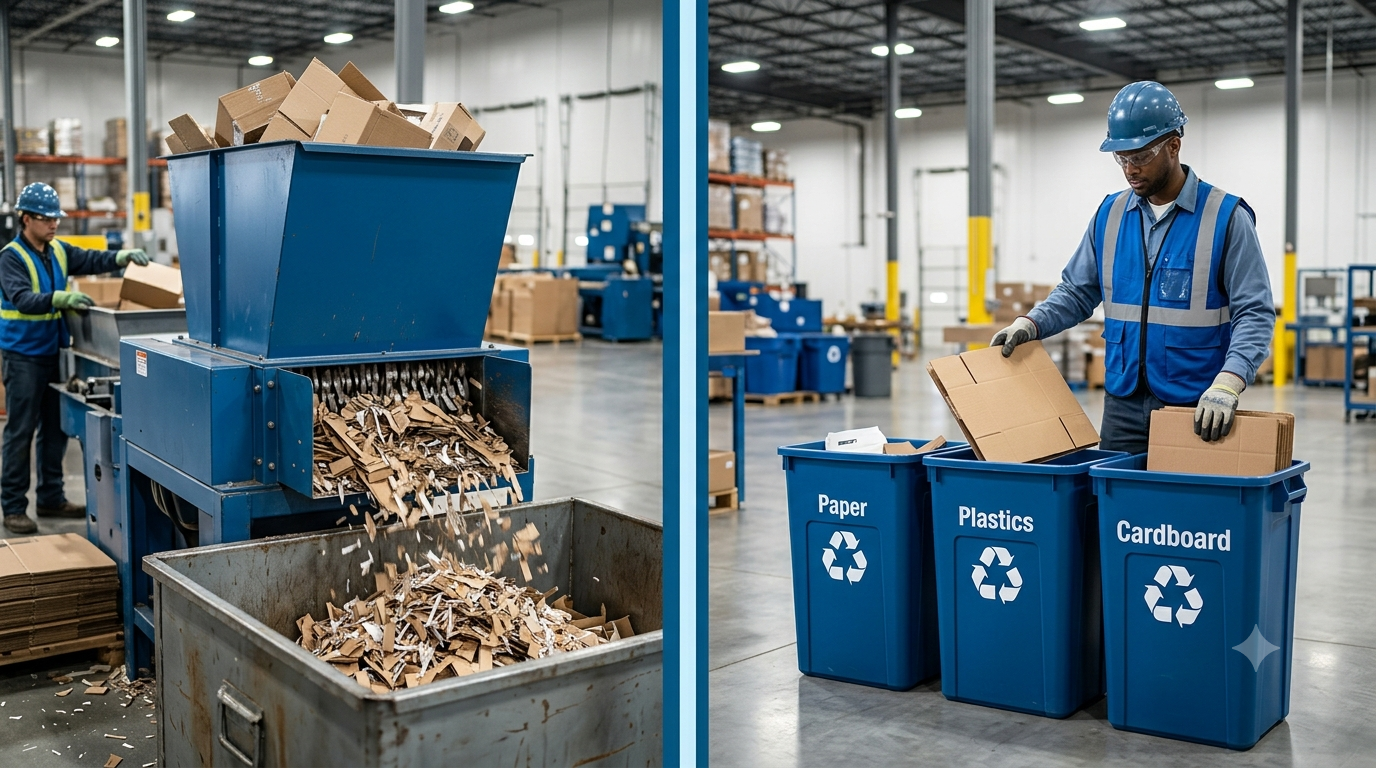
Inventory destruction refers to the permanent physical elimination of products so that they cannot be recovered, repaired, repackaged, resold, or reused in any form. The two primary methods are industrial shredding and incineration. The defining feature of destruction is irreversibility. Once a product has been destroyed, it no longer exists as a usable item.
Destruction is the right choice when the priority is ensuring that a product can never re-enter commerce. This is critical for recalled products, counterfeit goods, branded items at risk of gray market diversion, products containing sensitive data, and anything where resurfacing in the market would create legal or reputational risk.
What Is Inventory Disposal?
Inventory disposal is a broader category. It refers to removing products from your inventory through any compliant end-of-life channel. This can include destruction, but it also includes regulated waste disposal, recycling, composting, anaerobic digestion, and waste-to-energy processing.
Disposal is appropriate when the primary concern is compliant, responsible removal rather than guaranteeing that the item is rendered permanently unrecoverable. For example, clean organic waste that poses no brand or security risk may be composted rather than incinerated, which is a disposal method but not a destruction method.
The Key Differences at a Glance
| Factor | Destruction | Disposal |
|---|---|---|
| Goal | Render item permanently unrecoverable | Compliant end-of-life removal |
| Methods | Shredding, incineration | Recycling, composting, regulated waste, destruction |
| Best for | Recalls, counterfeits, branded goods, data | Organic waste, non-sensitive materials |
| Brand protection | Maximum | Varies by method |
| Reversibility | Irreversible | May be recoverable depending on method |
When You Need Destruction, Not Just Disposal
There are situations where ordinary disposal is not enough and full destruction is required to protect your business:
- Recalled products that regulators require to be permanently removed from commerce
- Branded apparel, cosmetics, or consumer goods at risk of gray market resale
- Counterfeit goods seized through customs or brand protection enforcement
- Electronics and storage media containing recoverable data
- Products whose reappearance could trigger product liability claims
In each of these cases, sending the product to a recycler or donating it without controls creates risk. Only certified destruction with documentation provides the protection these situations demand.
When Disposal Is the Right Choice
Destruction is not always necessary, and over-destroying can mean higher costs and unnecessary environmental impact. Disposal through composting, recycling, or anaerobic digestion may be the better path when:
- The material poses no brand, data, or counterfeiting risk
- Sustainability goals favor diversion from landfill or incineration
- Regulations permit recovery or recycling of the material
- The inventory is clean organic or recyclable material
How to Decide
The simplest way to decide is to ask one question: if this product reappeared in the market, would it create legal, financial, or reputational risk for my business? If the answer is yes, you need certified destruction. If the answer is no, compliant disposal may be sufficient.
When in doubt, destruction is the more conservative choice because it eliminates downstream risk entirely. The marginal cost is often small relative to the exposure that an improperly disposed product can create.
Get Expert Guidance on Destruction vs Disposal
At inventorydestruction.com, we help businesses determine the right end-of-life path for every category of inventory, from recalled consumer goods to organic waste. Every certified destruction project includes a Certificate of Destruction, and we provide compliant disposal options where destruction is not required. Contact our team to discuss your inventory and the right approach across all 50 states.