Beverage inventory is one of the more complicated categories to destroy, because a single pallet contains three separate problems at once: a liquid that has to be handled as a waste stream, a container that is often glass or aluminum, and in the case of alcohol, a federal excise tax position that depends on documentation.
Whether the trigger is spoilage, a failed quality hold, a co-packer error, a recall, a discontinued SKU, or product returned out of temperature control, the destruction process needs to address all three at the same time.
Why Beverages Cannot Be Poured Out and Landfilled
Pouring product down a drain sounds simple and is frequently prohibited. High-sugar and high-solids liquids place significant load on municipal treatment systems, and many jurisdictions restrict or meter discharge of this kind. Alcoholic product raises additional concerns. On the container side, sending full sealed units to a landfill wastes recoverable glass and aluminum and leaves branded, sellable-looking product intact in a place where it can be recovered.
Sealed beverage containers that reach the secondary market are a particular brand risk, because a bottle or can that looks unopened carries an implicit assurance of safety that the product no longer deserves.
Alcohol Inventory and the TTB
Beer, wine, and distilled spirits are subject to federal excise tax administered by the Alcohol and Tobacco Tax and Trade Bureau. Where product is destroyed rather than sold, the ability to claim a credit, refund, or relief on that tax generally depends on following the applicable procedures and retaining records that establish what was destroyed, in what quantity, when, and under what supervision.
The practical implication is that documentation is not just a compliance formality for alcohol inventory. It is directly tied to money. Businesses that destroy product informally often forfeit a recoverable tax position simply because nothing was recorded to the required standard. Notification requirements and supervision expectations vary by product class and by whether the product is still in bond, so confirm the applicable procedure with your compliance counsel or TTB specialist before destruction is scheduled.
Non-Alcoholic Beverage Destruction
Juice, soda, energy drinks, bottled water, dairy-based beverages, and functional drinks fall under FDA food safety oversight. When destruction is driven by a recall, the same expectations that apply to packaged food apply here: lot-level accounting matched against the recall notice, evidence that affected units were removed from commerce, and documentation retained for recall closeout.
Contamination, packaging integrity failures, mislabeling of allergens, and temperature excursions are the most common triggers, and each one produces inventory that cannot be donated or discounted.
How Depackaging Works
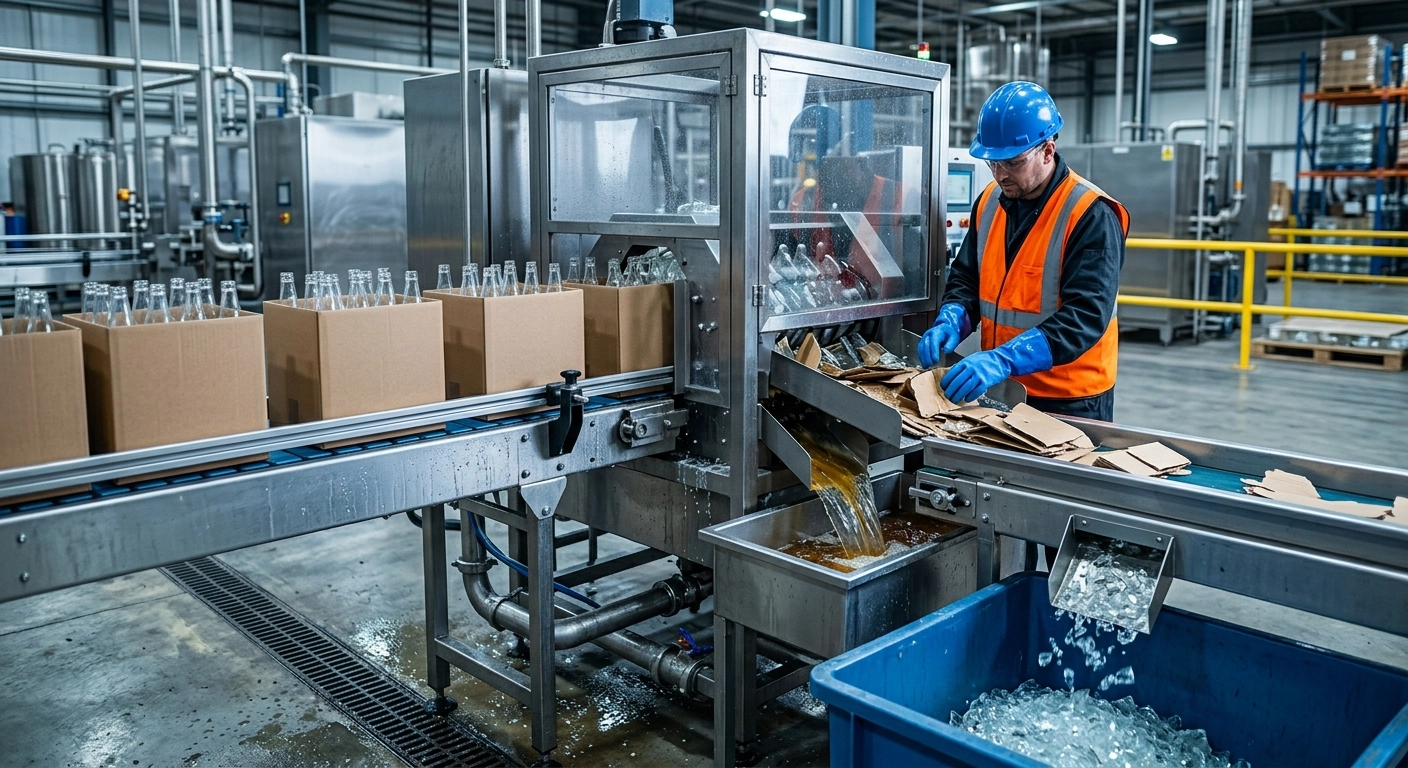
- Sealed units are fed into industrial depackaging equipment that separates liquid contents from containers
- Liquid is routed to an appropriate destination, which may include wastewater treatment under permit, anaerobic digestion, or energy recovery
- Glass, aluminum, plastic, and fiber packaging is segregated and sent to recycling where the material stream allows
- Branded labels, caps, and cartons are destroyed rather than recovered, so the packaging cannot be reused
- Weights and unit counts are recorded throughout for reconciliation against the manifest
This approach lets a business achieve a high diversion rate while still guaranteeing that no sellable unit survives the process.
What Documentation You Should Receive
At minimum, a destruction project should produce a manifest of what left your facility, chain-of-custody records covering each transfer, weight or unit counts confirmed at the destruction facility, and a Certificate of Destruction identifying the product, quantity, date, location, method, and responsible facility. For alcohol, retain this alongside your TTB records. For recalled product, the certificate should reference the specific lot codes named in the recall.
Get Certified Beverage Destruction Done Right
At inventorydestruction.com, beverage destruction projects are handled with industrial depackaging, appropriate routing of both liquid and container streams, and a Certificate of Destruction issued as a standard deliverable on every job.
Contact our team today to schedule certified beverage inventory destruction with full documentation across all 50 states.