
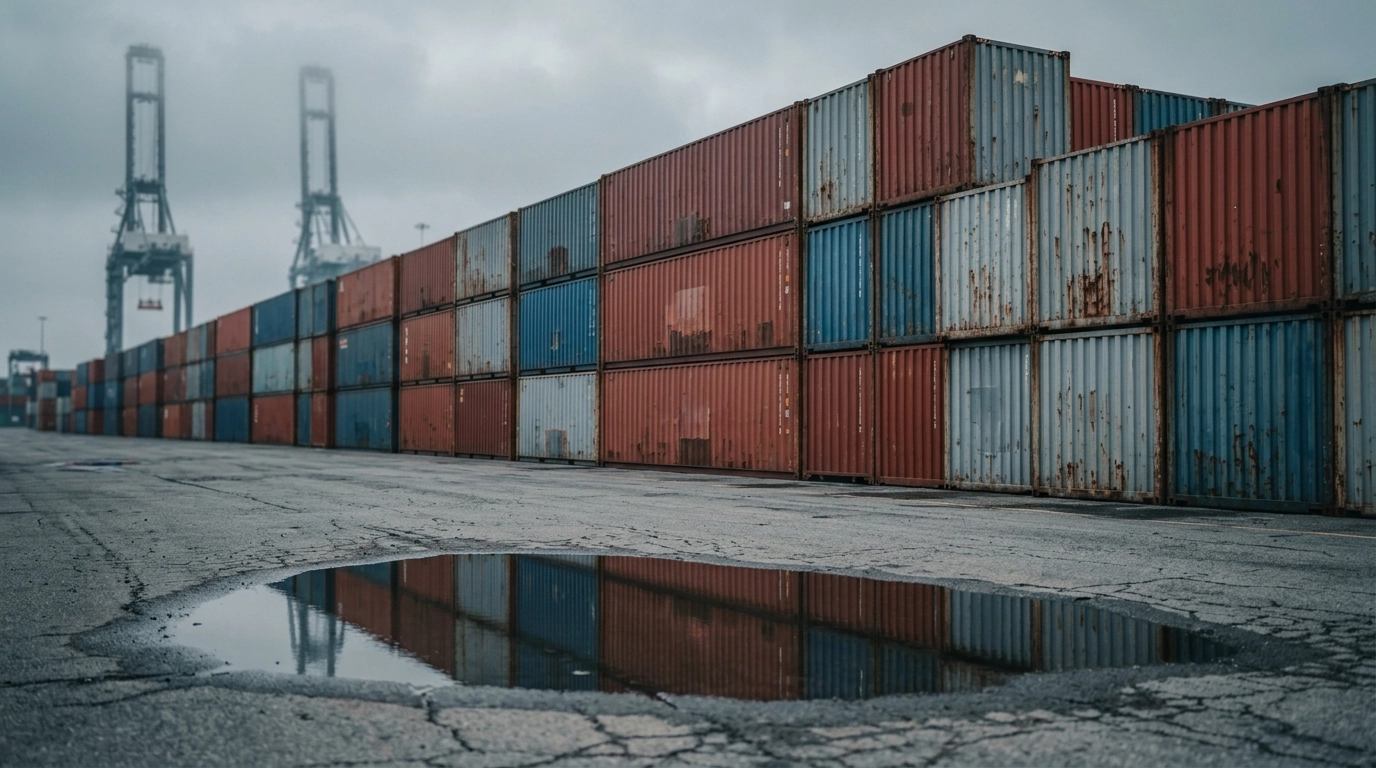
Cargo that arrives at a United States port and never moves creates a problem that gets worse
every single day. Storage accrues, liens attach, and the goods themselves often deteriorate
while the paperwork is sorted out. By the time somebody makes a decision, the value of the
freight can be less than the cost of recovering it.
This guide covers how cargo becomes stranded, when destruction is the better economic
answer than clearing, and what a port-adjacent destruction project actually involves.
How Cargo Becomes Stranded
Imported merchandise generally has to be entered within 15 calendar days of arrival at the port
of destination. Cargo that is not entered in that window goes to general order, and it is moved to
a bonded general order warehouse at the importer expense. Storage is billed from the first day,
on top of any demurrage that already accrued at the terminal.
The clock then keeps running. Merchandise that remains in a bonded warehouse for six months
from the date of importation without the duties, taxes, fees, storage, and other charges being
paid is treated as unclaimed and abandoned to the government, and it is appraised and sold at
public auction. Perishables and certain restricted goods move on much shorter timelines.
Entries go to general order for ordinary reasons: a missing document, a bond that turned out to
be too small, a consignee that stopped responding, a hold that was not resolved in time, or an
invoice the port director considered incorrect. None of them look serious on day one.
Why Clearing Is Not Always the Right Answer
Recovering general order cargo means filing the entry, paying the duties, and settling every
accrued charge, because the warehouse holds a lien until it is paid. Add drayage, lien release,
and handling in and out, and a modest shipment can accumulate thousands of dollars in
charges before anyone touches the product.
Now weigh that against what is actually inside the container. Seasonal product that missed its
window, goods that expired during the delay, items damaged by months in a non-climate-
controlled facility, or merchandise for a program that has since been canceled may have very
little remaining value. In some cases the goods cannot lawfully enter commerce at all.
When the recovery cost exceeds the recoverable value, documented destruction is frequently
the cheaper and cleaner exit. It also produces a clean record, which matters if there is a cargo
insurance claim, a dispute with a supplier, or a write-off that has to be explained later.
Cargo Conditions That Force the Decision
Water Damage and Container Rain
Condensation inside a container during an ocean crossing soaks cartons from the top down.
Fiber packaging collapses, labels lift, and product that is technically intact becomes unsellable
because nobody will accept the presentation.
Mold and Odor
Once mold establishes itself in cartons or textiles, it does not stay in one place, and terminal
operators are not interested in storing it. Odor transfer from a co-loaded product creates the
same outcome even where the goods themselves are undamaged.
Pest and Infestation Findings
Infested loads are usually a fast decision. Fumigation is sometimes possible, but for food,
textiles, and packaged consumer goods, the cost and the residual doubt often push the load
toward destruction.
Temperature Excursion on Refrigerated Loads
A reefer failure or a power gap during transfer puts the entire load outside its validated range.
For food and other temperature-sensitive product, there is no way to establish that individual
units are safe.
Perishables Move on a Shorter Clock
Spoiling food at a marine terminal or a general order facility is not a storage problem, it is an
odor, pest, and health complaint problem, and pressure to remove it arrives quickly. These
loads need depackaging so that the organic fraction is routed appropriately and the packaging is
handled separately, rather than sending sealed cases to a landfill intact.
How Port-Adjacent Destruction Projects Are Handled
• Assessment of what is actually in the load, since the manifest and the physical condition
often no longer match
• Confirmation of custody status, because merchandise still under customs control may
require bonded cartage
• Scheduled receipt at a facility with capacity to take a full load rather than a few pallets at
a time
• Unit counts and verified weights recorded at receipt
• Segregation of packaging, pallets, and dunnage from the product itself
• A Certificate of Destruction referencing the container number, bill of lading, and entry
number where applicable
Documentation Everyone Will Ask For
More parties want proof on these projects than on an ordinary warehouse cleanout. The carrier
and the terminal want evidence for their own file. A cargo insurer will want proof before settling a
claim. Your customs broker needs the record for the entry file. If a supplier is being charged
back for the loss, they will want to see it too.
A single certificate that names the container, the bill of lading, the product, the quantity, the
method, the date, and the facility satisfies all of them at once. A certificate that says a load was
disposed of satisfies none of them.
Clear the Freight and Close the File
At inventorydestruction.com, stranded, abandoned, and general order cargo is handled with
scheduled receipt, itemized records, appropriate routing of both product and packaging, and a
Certificate of Destruction issued on every project.
Confirm custody status with your broker and the terminal before moving anything. Contact our
team today to schedule certified inventory destruction with complete documentation across all
50 states.