
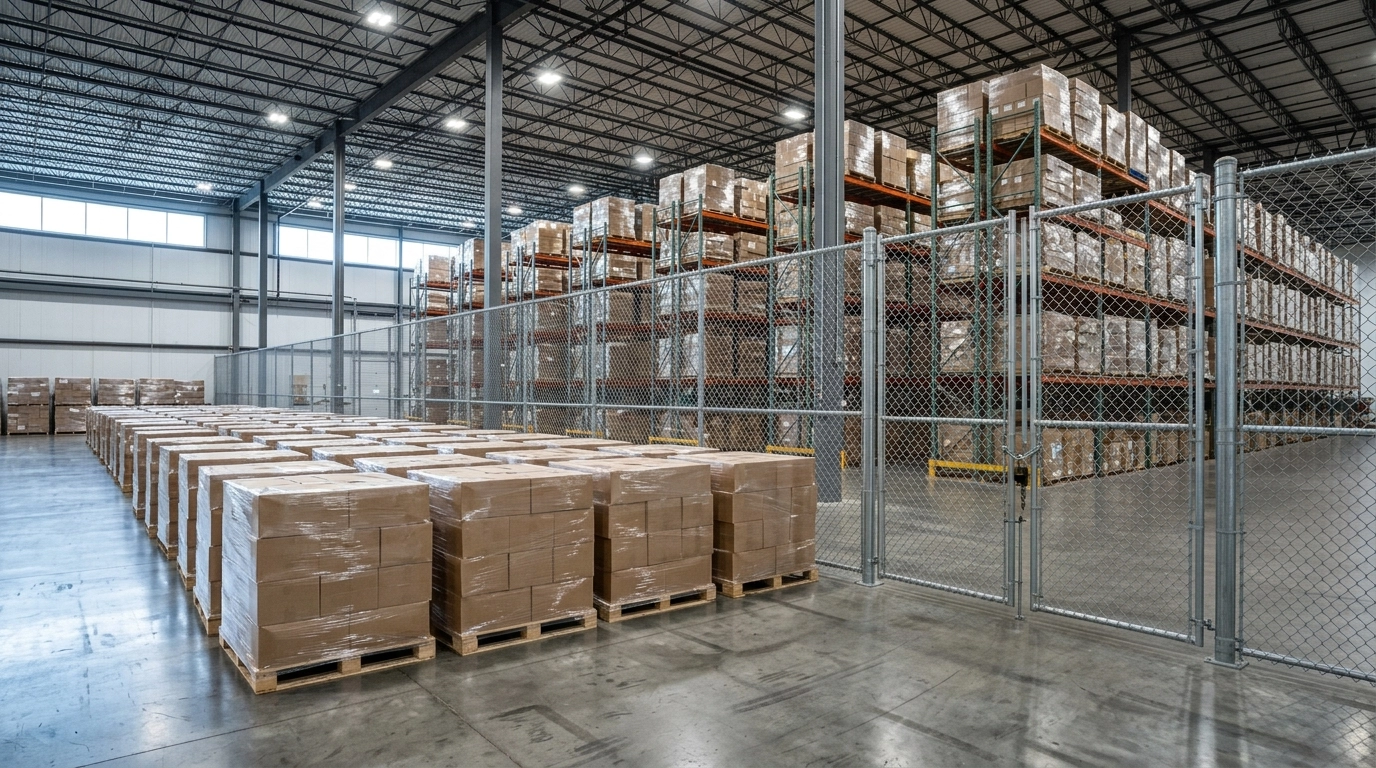
Imported inventory that has not cleared customs sits in a different legal position than product in your own warehouse. Goods held in a foreign trade zone or a customs bonded warehouse have not entered United States commerce, duty has not been paid on them, and they remain under customs control. Destroying that inventory is a customs transaction before it is a waste transaction.
Businesses that treat it as an ordinary disposal job run into problems fast: unexpected duty and tax liability, bond claims, penalties, and destruction records that do not satisfy anyone reviewing the file later. This guide explains how destruction under CBP supervision actually works and what your destruction partner needs to be able to do.
Why Bonded and Zone Inventory Cannot Simply Be Hauled Away
Merchandise in a zone or bonded facility is under customs control, which means you do not have free disposition of it. It cannot be manipulated, destroyed, or moved out of the facility except under a customs permit. That restriction exists to protect the revenue, because the government has a duty and tax interest in goods that have not yet been entered for consumption.
The practical consequence is significant. A zone operator is liable under its operator bond for merchandise that cannot be located or accounted for, and merchandise that goes missing can turn into a demand for entry and payment of the duties and taxes owed on it. Product that disappears from the records because someone sent it to a landfill without authorization is not a disposal saving. It is an open liability.
Destroying Merchandise Inside a Foreign Trade Zone
Destruction of merchandise in an FTZ runs through a permit process. Before any action is taken, the operator files an application with the port director on CBP Form 216 requesting permission to destroy the merchandise. This can be filed for a single event or as a blanket application covering a recurring activity, and the results of an approved destruction are reported on the same form unless the port director elects to physically supervise the operation.
There is one provision that matters enormously in practice. If proper destruction cannot be accomplished inside the zone, the port director may permit destruction to be done outside the zone, in whole or in part, at the risk and expense of the applicant, under conditions set to protect the revenue. This is the pathway most businesses end up using, because very few zone facilities have industrial shredding, incineration, or depackaging capacity on site.
Zone-restricted merchandise can be transferred into customs territory for destruction, with a specific carve-out for distilled spirits, wine, and fermented malt liquors. If your inventory falls into that category, the pathway is different and needs to be confirmed before anything is scheduled.
Bonded Warehouse Inventory
A customs bonded warehouse lets an importer defer duty until merchandise is withdrawn for consumption. That deferral is useful right up until the point where the product is never going to be sold. At that point, withdrawing the goods for consumption means paying duty on inventory you are about to destroy, which is the worst of both outcomes.
Common triggers for destroying bonded inventory include product that expired while in storage, goods damaged by water or handling inside the facility, merchandise that failed inspection, obsolete packaging or seasonal product that has no remaining market, and canceled programs where the buyer walked away. In each case the destruction has to be arranged through the applicable customs procedure rather than as a routine warehouse cleanout.
Procedures vary by port and by the status of the merchandise. Confirm the specific pathway with your customs broker or trade counsel before scheduling anything.
What Destruction Under CBP Supervision Actually Means
Businesses often assume that supervision means an officer will be standing at the machine. Sometimes that is exactly what happens. Frequently it is not. CBP decides whether it will attend a given destruction, and where it elects not to attend, the burden shifts entirely onto your documentation.
That shift is the single most important thing to understand about these projects. When the government does not witness the event, the record you produce becomes the evidence that the destruction happened as described. A vague certificate stating that materials were destroyed will not carry that weight. The record has to be specific enough that someone reviewing it two years later can tie it back to the exact merchandise, the exact entry, and the exact date.
What Your Destruction Vendor Needs to Be Able to Do
- Accept product released from a zone or bonded facility under whatever conditions the port director has set
- Commit to a specific scheduled destruction date, since notice filings name a date and a location that must be honored
- Provide itemized unit counts and weights reconciled against the manifest at receipt
- Accommodate a government officer or a third-party witness if attendance is elected
- Issue a Certificate of Destruction naming the method, date, location, facility, and the specific merchandise destroyed
- Retain project records long enough to survive an audit or a claim raised years after the fact
A vendor that cannot hold a date is a real problem on these projects. Destruction runs are batched, and a facility that treats your scheduled date as approximate will put you out of alignment with a filing that named that date specifically.
Documentation That Closes the File
The destruction record should reference the customs paperwork directly. That means entry numbers, zone lot numbers or warehouse entry references, container and bill of lading numbers where applicable, and product identification at the SKU and lot level rather than a general description of the load.
File the Certificate of Destruction with the customs documentation for that merchandise, not in a separate operations folder. The people who eventually need it will be looking in the customs file, and a certificate nobody can find is functionally the same as a certificate that was never issued.
Coordinate Destruction Before the Deadline
At inventorydestruction.com, destruction projects for imported inventory held in bonded and zone facilities are scheduled to a firm date, with itemized receiving records and a Certificate of Destruction issued as a standard deliverable on every job.
Contact our team today to schedule certified inventory destruction with full documentation across all 50 states.